
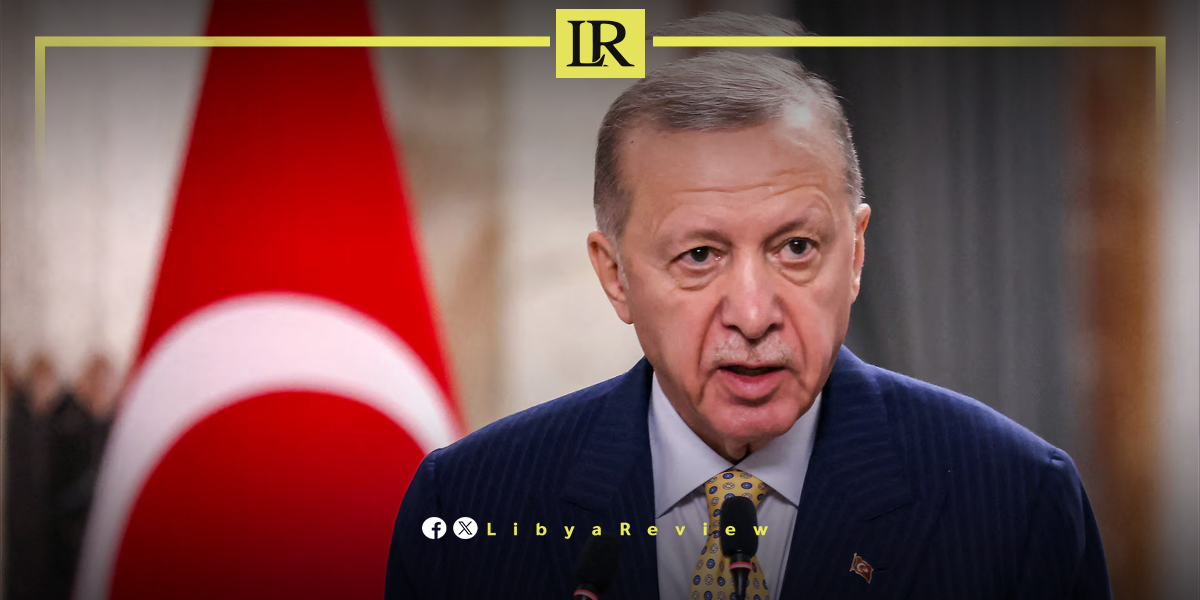
Turkey’s President Recep Tayyip Erdoğan has formally submitted a memorandum to the Turkish Grand National Assembly seeking approval to extend the mandate of Turkish forces deployed in Libya for an additional 24 months.
According to the Turkish daily Yeni Şafak, the request was referred to parliament on Sunday and would extend the deployment from January 2, 2026, if endorsed by lawmakers.
The memorandum, signed by Erdoğan, reviews Libya’s political and security trajectory since 2011 and emphasizes Ankara’s view that stability in Libya is critical for both regional security and Turkey’s strategic interests. It states that Turkey continues to support UN-led political efforts and relevant UN Security Council resolutions aimed at preserving Libya’s sovereignty, territorial integrity, and political unity, while working toward a lasting ceasefire, national reconciliation, and credible nationwide elections.
The document warns that Libya’s ongoing political deadlock and governance challenges—particularly the failure to hold elections—pose a serious threat to the fragile calm achieved in recent years. It argues that renewed instability could reverse security gains, undermine political dialogue, and create broader risks for the Mediterranean region.
The memorandum highlights the importance Ankara places on maintaining its military presence in Libya, citing longstanding historical, political, and economic ties between the two countries. It also references the maritime boundary memorandum signed between Turkey and Libya, which Ankara views as a cornerstone of its eastern Mediterranean strategy.
Turkey maintains that its forces operate under a bilateral security and military cooperation agreement, providing training and advisory support to Libyan forces. The memorandum claims that Turkish involvement has contributed to maintaining stability on the ground, while acknowledging that a permanent ceasefire, full political settlement, and unification of Libya’s military and security institutions have yet to be achieved.
The document stresses that preventing a return to armed conflict is essential for the success of UN-sponsored military and political talks. It also warns that instability in Libya could negatively affect Turkey’s interests in the Mediterranean and North Africa, particularly in the event of renewed fighting.

