
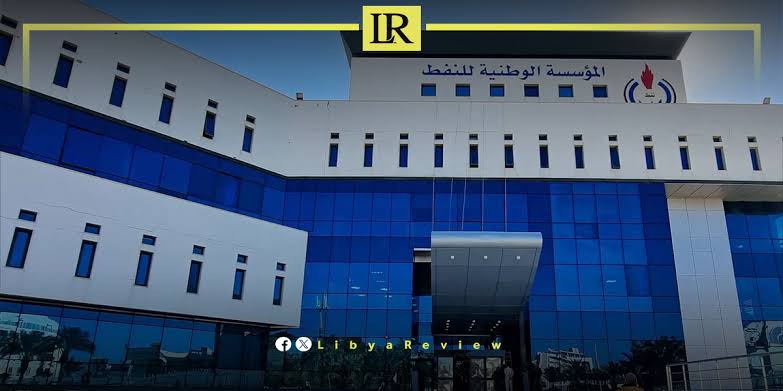
Libya’s National Oil Corporation (NOC) has announced that it transferred $22 billion to the Central Bank of Libya during 2025, underlining the oil sector’s continued role as the main source of public revenue for the country.
In a statement accompanied by financial data published on Thursday, the NOC said the transfers were made as part of its regular financial obligations to the Central Bank, which manages state revenues and public spending. The corporation also disclosed additional payments linked to fuel supplies and operational settlements.
According to the data, the NOC provided $4 billion in fuel-related payments in the form of in-kind guarantees. These arrangements are intended to secure the supply of petroleum products to the local market and stabilise domestic fuel availability amid ongoing economic pressures.
The corporation reported that payments made on behalf of other entities reached $578.8 million, while the value of gas supplied to the domestic market through purchases from operating companies amounted to $633.6 million. Fuel swap transactions for January and February 2025 alone totalled $1.365 billion, reflecting the high cost of meeting local demand.
The NOC also revealed that the value of fuel supplied during the previous year reached $7.86 billion, highlighting the financial burden of fuel provision in Libya, where domestic consumption remains high and prices are heavily subsidised.
With regard to liquidity, the corporation said that $2.67 billion was disbursed through the Central Bank during the year, while $3.82 billion remained undisbursed. These figures point to ongoing challenges related to cash flow management and the timing of payments within Libya’s public financial system.
The announcement comes amid renewed public debate over transparency in oil revenues and their distribution. As Libya continues to rely almost entirely on hydrocarbons to fund the state budget, the scale of transfers from the NOC to the Central Bank remains a key indicator of economic stability and fiscal capacity.

