
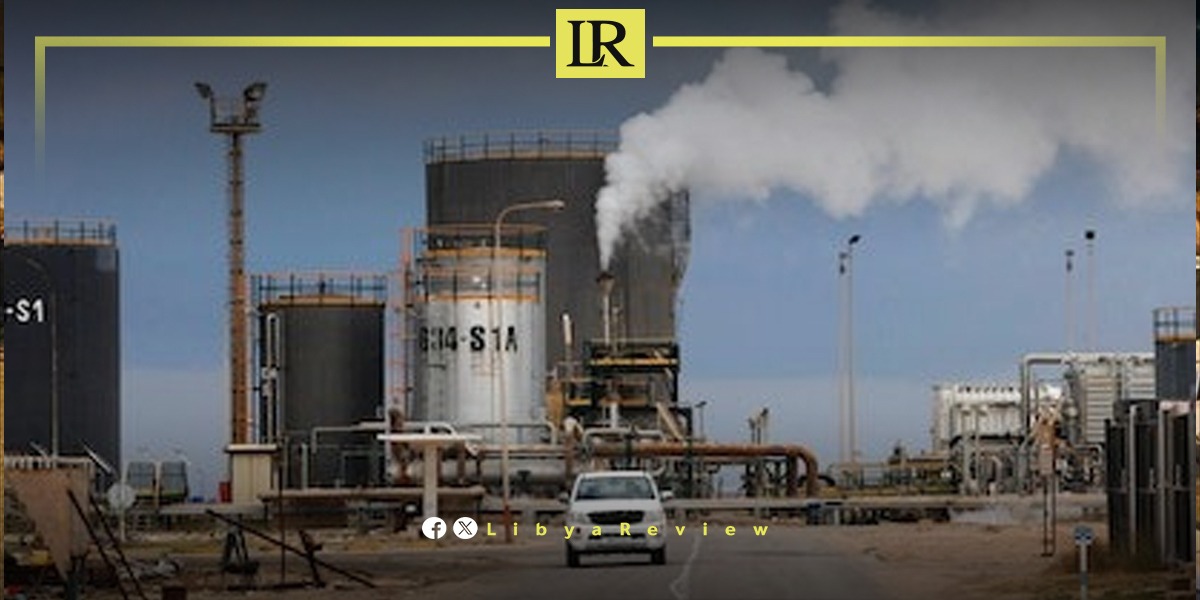
Despite its vast territory, strategic location, and abundance of natural and agricultural resources, Libya continues to struggle to activate and expand its non-oil exports.
For decades, the country has relied almost entirely on oil and gas revenues, creating a fragile economic model that leaves little room for diversification and exposes the economy to external shocks.
Recent data underscores this imbalance. Oil and gas account for roughly 94 percent of Libya’s total exports, while non-oil exports remain below one billion dollars annually. Even within this limited figure, iron and steel products dominate, leaving other promising sectors largely underdeveloped.
This reality persists despite Libya possessing one of the longest Mediterranean coastlines, fertile agricultural zones, and the capacity to produce competitive goods such as dates, olive oil, and fishery products.
Local producers and industrial operators point to deep-rooted structural challenges. Administrative bureaucracy, slow banking procedures, and complex customs regulations often delay production and exports for weeks.
Manufacturers report difficulties accessing foreign currency, irregular shipping schedules, and limited logistical support, all of which raise costs and undermine competitiveness. In many cases, importing finished goods is easier and more profitable than producing locally for export.
Institutional weaknesses further compound the problem. Libya lacks a comprehensive national strategy for export development, marketing, and industrial promotion. While official bodies acknowledge these shortcomings and have announced corrective measures, progress remains slow and uneven.
The absence of consistent quality standards, export financing tools, and international branding has left Libyan products largely invisible in global markets.
Political instability has also played a central role. Years of division and weak governance have discouraged long-term investment, disrupted supply chains, and prevented the implementation of sustained economic reforms. As a result, non-oil sectors have remained marginalized, while public spending continues to depend overwhelmingly on hydrocarbon revenues.
Economic experts argue that reversing this trend requires a fundamental shift in policy. Strengthening local production, simplifying procedures, improving infrastructure, and supporting exporters through incentives and market access are essential steps.
Without a serious commitment to diversification and institutional reform, Libya will remain trapped in an oil-dependent cycle, unable to unlock the full potential of its non-oil economy or achieve sustainable growth.

