
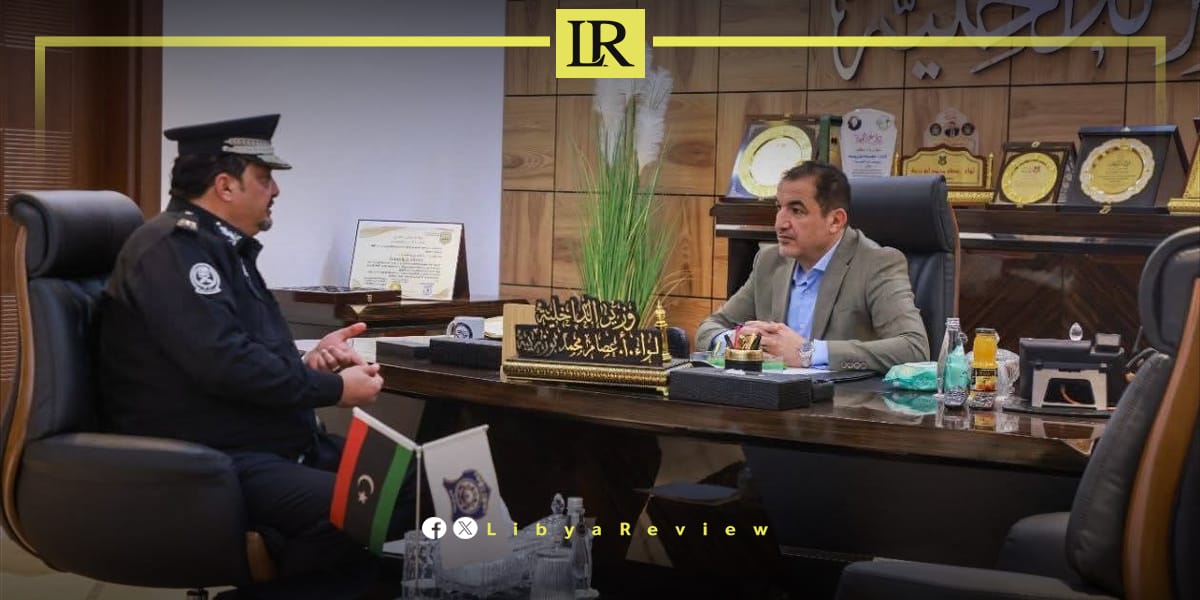
Libya’s Interior Minister in the Parliament-designate government has reviewed the latest efforts of the Department for Combating Illegal Migration, including preparations to graduate the first batch of newly recruited personnel, as part of broader plans to strengthen internal security and manage irregular migration.
Interior Minister Major General Issam Abu Zriba held talks in Benghazi with the head of the Department for Combating Illegal Migration, Major General Salah Mahmoud Al-Khafifi. The meeting focused on the department’s operational needs and the outcomes of a recent security campaign carried out in the southern city of Sebha.
According to officials, the campaign was conducted in coordination with the General Administration for Security Operations and the Sebha Security Directorate. It targeted undocumented migrants and informal settlements, as part of a comprehensive security plan aimed at restoring control, addressing irregular migration, and limiting the spread of unregulated housing areas.
The meeting also discussed ongoing preparations for the graduation of the first intake of new personnel affiliated with the department. The batch includes 370 recruits who are expected to complete their training and formally graduate in the coming week. Officials said the new graduates would significantly boost the department’s manpower and operational capacity.
The interior minister praised the security forces involved in the Sebha campaign, describing the operation as an important step towards reinforcing public order and safeguarding communities. He stressed that irregular migration poses security, health, and social risks, requiring sustained and coordinated action by state institutions.
Abu Zriba added that the graduation of the new recruits would represent a qualitative addition to the department, enhancing its ability to carry out its duties more effectively across different regions of the country. He underlined the government’s commitment to supporting security agencies through training, logistical backing, and institutional development.
Libya continues to face complex challenges linked to irregular migration, particularly in the south, which remains a key transit area. Authorities say strengthening specialised units and expanding trained personnel are central to addressing these challenges and improving overall stability.

