
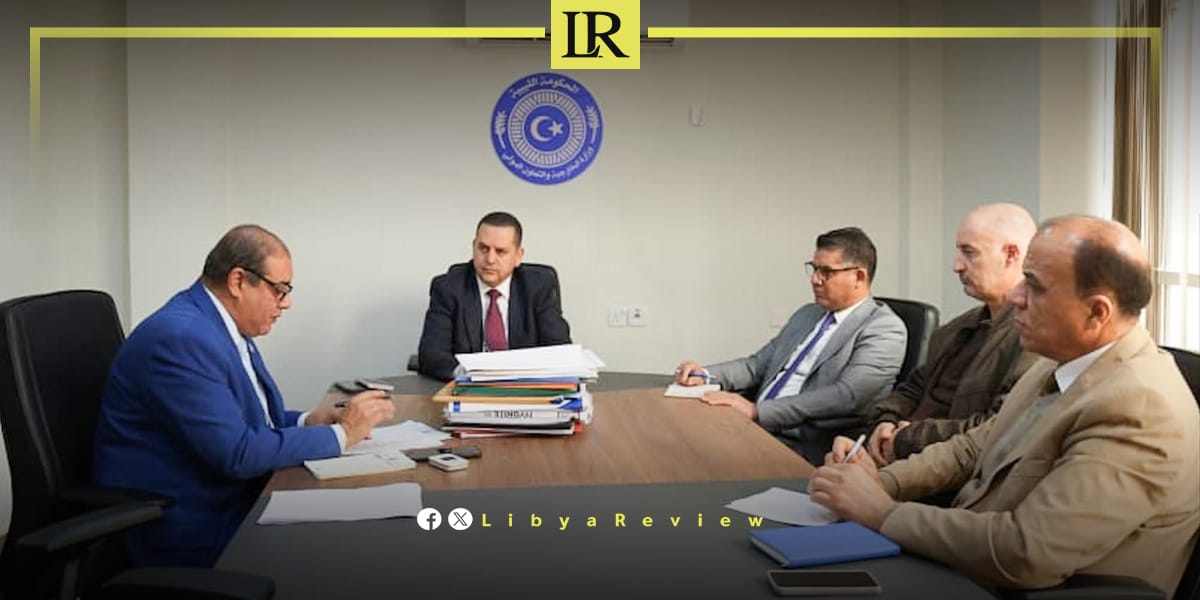
The national committee responsible for granting operating permits to foreign non-governmental organisations held its fourth meeting in Benghazi, chaired by Foreign Minister Abdulhadi Al-Hwaij, as part of continued efforts by the eastern Libyan government to regulate international activities in the country.
The meeting took place at the headquarters of the Ministry of Foreign Affairs and International Cooperation and focused on reviewing applications submitted by foreign organisations seeking authorisation to operate inside Libya. According to an official statement, the committee examined 21 applications during the session.
Following legal and technical assessments, the committee approved operating permits for 13 organisations. A further eight applications were deferred pending the completion of additional evaluation procedures. These files will be reconsidered during the committee’s next scheduled meeting.
Officials said the meeting forms part of a broader policy aimed at organising and institutionalising the presence of foreign organisations in Libya. The approach seeks to ensure that humanitarian and development activities are carried out in line with national legislation and government directives.
The committee stressed that all approved organisations must comply strictly with Libyan laws and regulations. It also underlined the importance of respecting state sovereignty, refraining from political involvement, and adhering to Libya’s religious, social and cultural values.
The discussions were held within the framework of government instructions issued by Prime Minister Osama Hammad, which call for improved coordination with international partners while maintaining firm oversight of foreign activity.
Committee members highlighted the need to create an organised and transparent working environment that allows foreign organisations to deliver humanitarian and development assistance effectively, while ensuring accountability and oversight.
The government views the regulation of foreign NGOs as essential to improving the efficiency of aid delivery and strengthening cooperation with local institutions. Officials said the current review process aims to balance openness to international partnerships with the protection of Libya’s national interests.
The committee reaffirmed its commitment to continuing evaluations in a structured and professional manner, as Benghazi and other cities seek to benefit from responsible and legally compliant international engagement.

