
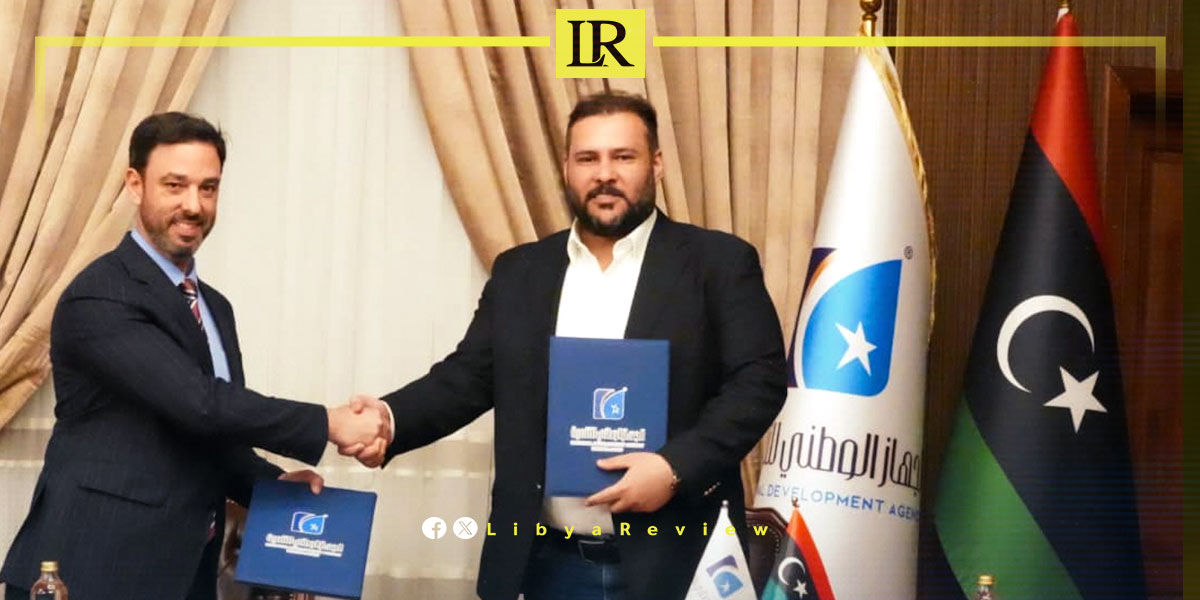
Libya has launched two major development projects in the city of Sirte, marking a new phase in efforts to rebuild infrastructure and strengthen the city’s role as a national administrative and economic hub.
The agreements were signed by Mahmoud Al-Ferjani, Director General of the National Development Authority, with leading international companies specializing in large-scale construction and infrastructure.
The first project involves the construction of the Sirte International Equestrian Track, a large-scale sports and entertainment complex designed to meet global standards for horse racing. The facility will include a main racecourse, spectator stands, VIP sections, stables, veterinary services, and administrative buildings. It will also feature a dedicated arena for traditional Libyan equestrian activities, along with supporting infrastructure and open spaces capable of hosting major regional and international events.
The second project focuses on building a new government complex in Sirte, intended to serve as a modern administrative hub. The complex will include a central government headquarters, official offices, administrative facilities, and protocol spaces, in addition to integrated security and service infrastructure. The project is part of a broader vision to develop Sirte into a key center for governance, enhancing institutional coordination and improving the efficiency of public administration.
Officials say these projects form part of a wider national strategy aligned with Libya’s long-term development plans, including Vision 2030, which seeks to modernize infrastructure and revitalize key cities. Sirte’s central geographic location has made it a strategic focus for such initiatives, as authorities aim to transform it into a hub that connects different regions of the country.
Al-Ferjani emphasized that the projects will contribute to stimulating economic growth, attracting investment, and creating job opportunities. He noted that improving infrastructure and public facilities is essential to supporting sustainable development and meeting future demands.

