

Libya remains locked in a complex crisis marked by political division, security instability, and ongoing human rights concerns, with no clear path toward resolution.
Recent developments have added new pressure to an already fragile landscape, particularly amid growing questions about leadership and governance.
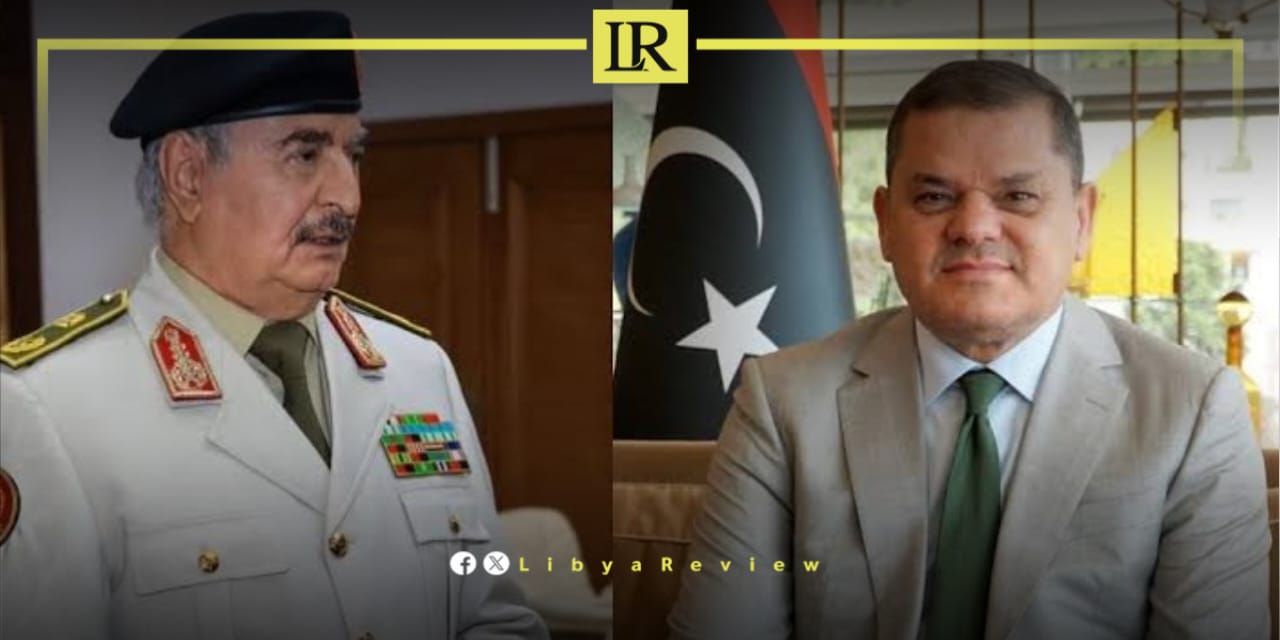
Uncertainty has increased following reports about the health of Abdel-Hamid Dbaiba, whose absence from major public events has raised concerns about his ability to manage state affairs effectively.
His government continues to face criticism over weak governance, unilateral decisions, and failure to address worsening economic and security challenges in western Libya.
In contrast, Khalifa Haftar remains a central figure in eastern Libya, where efforts to strengthen security structures and maintain stability continue.
Discussions around leadership in the east have increasingly focused on institutional continuity, with figures such as Saddam Haftar gaining prominence following his appointment as Deputy Commander-in-Chief of the Libyan National Army.
This reflects a broader push toward structured leadership and continuity within the military establishment.
Beyond internal politics, Libya’s southern regions are playing a growing role in regional security dynamics.
Cross-border networks linking Libya and Sudan have expanded, facilitating the movement of weapons, fuel, and migrants through informal routes. These networks operate across desert corridors and logistical hubs, shaping conflict dynamics and strengthening non-state actors.
Libya’s position as a transit point for migration continues to draw international attention. Smuggling networks remain active, moving migrants from sub-Saharan Africa toward Europe. These operations are sustained by weak border control and fragmented authority, particularly in the south, where armed groups often control key routes.
At the same time, human rights conditions remain a serious concern.
The International Commission of Jurists has warned of continued violations, especially in detention centers. Reports indicate ongoing cases of arbitrary detention, enforced disappearances, and poor conditions.
Migrants and vulnerable groups remain at particular risk, while legal protections are still limited.
Despite some engagement with international recommendations, progress remains slow. The lack of unified institutions and accountability mechanisms continues to hinder reform efforts.
Libya’s crisis is shaped by the interaction of political weakness in the west, relative security consolidation in the east, expanding cross-border threats, and persistent human rights issues.
Without a unified national framework and stronger governance, the country is likely to remain in a prolonged state of instability, with risks extending beyond its borders.