
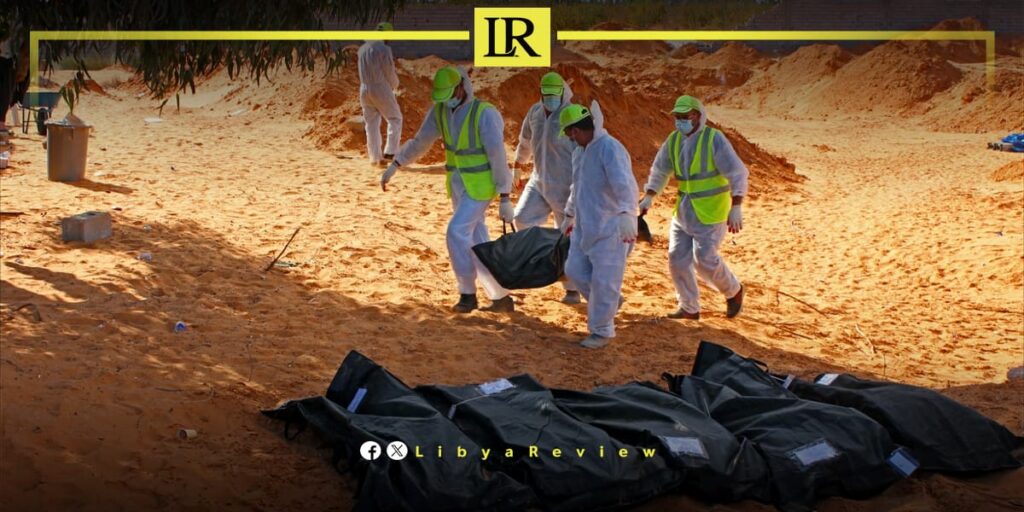

Libya is facing renewed international pressure after rights groups signalled plans to file complaints with the International Criminal Court and Interpol over allegations of secret mass graves linked to armed groups in Tripoli.
The move follows reports by local authorities of several suspected mass grave sites discovered in western Libya. Activist Mohamed Al-Kamishi previously claimed that members of the Stability Support Apparatus were involved in creating hidden burial sites, citing what he described as documented evidence.
The armed group was formerly led by Abdul Ghani Al-Kikli, who was killed months ago during operations by forces aligned with the Government of National Unity under Abdulhamid Dbaiba.
Five international organisations have called for an urgent, transparent and independent investigation into the case, arguing that accountability is essential to address serious human rights violations.
Political analyst Hossam Al-Fanich said the potential legal action goes beyond human rights concerns and reflects deeper political dynamics. He noted that such moves often intersect with shifting power balances among local actors.
Al-Fanich added that international justice mechanisms face practical limitations, which can create perceptions of selective enforcement. This, he said, may affect trust among Libyan stakeholders and lead to the politicisation of legal cases.
Libya continues to experience complex political divisions and overlapping security structures, making it difficult to separate legal accountability from broader political arrangements.
Experts warn that while legal initiatives are important, their effectiveness depends on the ability to operate within a stable institutional environment. Without this, efforts to pursue justice risk becoming part of wider political struggles.
The calls for investigation highlight ongoing concerns over accountability and the rule of law in Libya, particularly in cases involving armed groups.
Authorities have yet to announce concrete steps regarding the allegations, leaving questions over how the case will develop in the coming period.