
Sunday, April 12, 2026
LibyaReview
  • Home
  • Libya
  • Economy
  • Sport
  • Politics
  • Entertainment
  • Opinion
No Result
View All Result
  • Home
  • Libya
  • Economy
  • Sport
  • Politics
  • Entertainment
  • Opinion
No Result
View All Result
LibyaReview
No Result
View All Result
Home Libya

Libya Reemerges as Key Trade Gateway in New China-Linked Maritime Corridor

April 6, 2026
Libya Reemerges as Key Trade Gateway in New China-Linked Maritime Corridor

Libya Reemerges as Key Trade Gateway in New China-Linked Maritime Corridor

Share on FacebookShare on Twitter

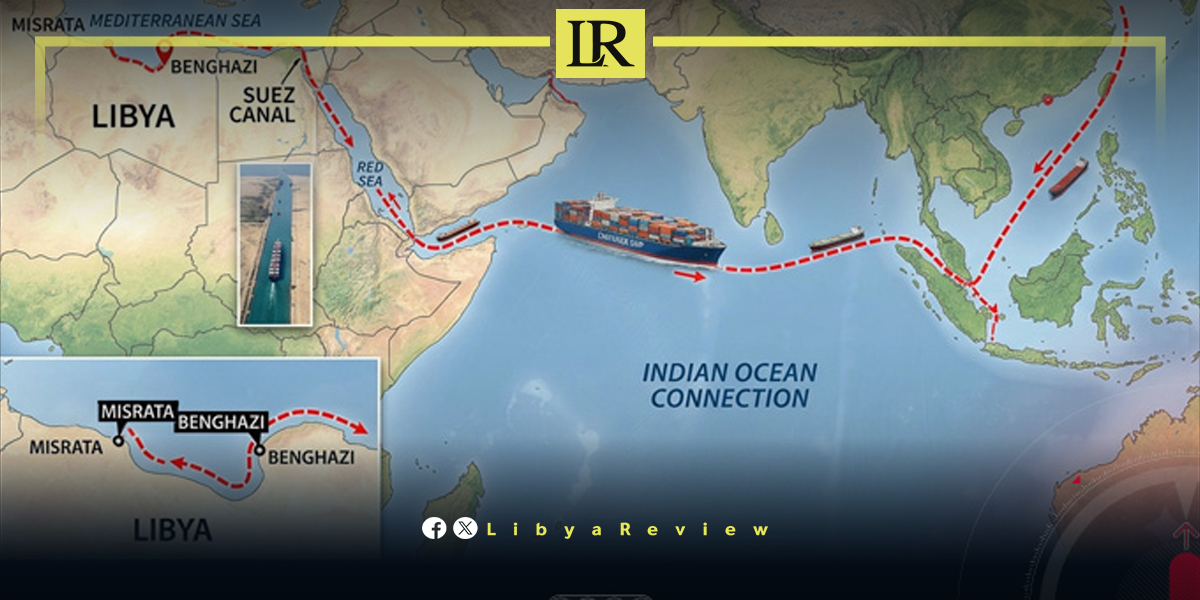
Libya is emerging as a key strategic hub in a newly announced maritime trade route launched by China, linking the port of Qingdao with Egypt and Libya in a move that could reshape regional trade dynamics and strengthen Libya’s role in global logistics.

The new shipping corridor passes through Port Said in Egypt before reaching Libya’s major ports, including Benghazi and Misrata.

The route is expected to reduce transit times by up to ten days compared to traditional shipping paths, offering faster and more cost-efficient transport while reducing exposure to geopolitical risks in critical chokepoints such as the Strait of Hormuz.

For Libya, the development represents a significant opportunity to reposition itself as a gateway between Africa and Europe. With its geographic location at the crossroads of key trade routes, Libya has long held untapped potential as a logistics and transit center. The new route could accelerate that transformation, particularly if ongoing infrastructure projects are successfully completed.

Plans to upgrade ports such as Benghazi and Sirte, alongside the development of overland corridors linking eastern Libya to sub-Saharan Africa, are expected to play a crucial role in enhancing the country’s connectivity. These projects aim to facilitate the movement of goods from African markets through Libya to Europe, reinforcing its position as a regional trade bridge.

Economically, the route could help reduce import costs, improve supply chain efficiency, and create new opportunities for Libyan businesses in transport, warehousing, and distribution. Increased trade activity is also expected to generate employment across logistics, maintenance, and related sectors.

Tags: AfricaChinaeuropelibyaMaritime Route
Next Post
Libya’s Economy Slips Near the Bottom of Global Freedom Rankings

Libya’s Economy Slips Near the Bottom of Global Freedom Rankings

POPULAR CATEGORIES

  • Home
  • Libya
  • Economy
  • Sport
  • Politics
  • Entertainment
  • Opinion

MUST READ

US Report Flags Libya as Key Hub for Expanding Russian Influence in Africa

Libya’s Budget Breakthrough: A Step Toward Stability After Years of Division

No Sign of Sabotage in Deadly Crash of Libyan Military Chief, Turkey Says

Libya Welcomes Foreign Ministers for CEN-SAD Comeback

Major Highway Project Signals Libya’s Push to Reconnect North and South

Dust Storm Reduces Visibility Across Western Libya

EDITOR PICKS

Dust Storm Reduces Visibility Across Western Libya

Arab League Chief Welcomes Libya Deal as Sign of Unity

Libya and UN Step Up Cooperation to Strengthen Border Security

No Sign of Sabotage in Deadly Crash of Libyan Military Chief, Turkey Says

Libya’s Budget Breakthrough: A Step Toward Stability After Years of Division

Major Highway Project Signals Libya’s Push to Reconnect North and South

  • Home
  • Libya
  • Economy
  • Sport
  • Politics
  • Entertainment
  • Opinion

© 2024 LR

No Result
View All Result
  • Home
  • Libya
  • Economy
  • Sport
  • Politics
  • Entertainment
  • Opinion

© 2024 LR