
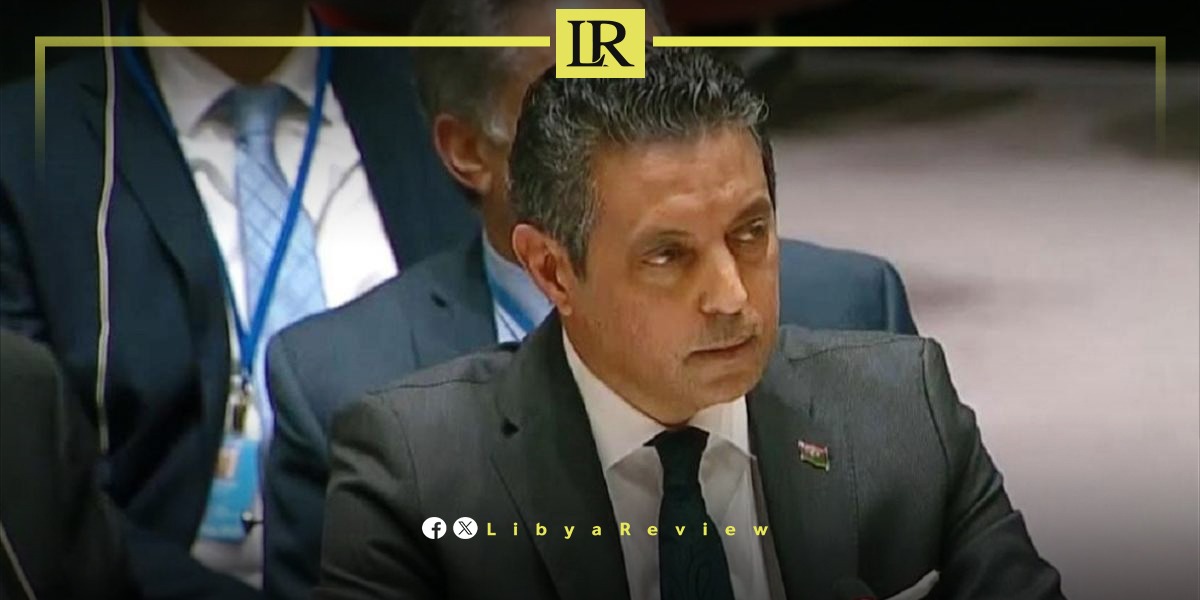
Libya’s Permanent Representative to the United Nations, Taher Al-Sunni, has reaffirmed Libya’s firm opposition to any plans aimed at establishing migrant camps on its territory, stressing that the country cannot shoulder the burden of irregular migration alone and calling for greater international cooperation to address the crisis.
Al-Sunni’s remarks came following a meeting with Ulrika Richardson, Deputy Special Representative of the UN Secretary-General and Resident Coordinator in Libya.
The discussions focused on the activities of the United Nations team in Libya, as well as ongoing efforts to support development initiatives and humanitarian programs across the country.
In comments shared after the meeting, Al-Sunni emphasized that Libya welcomes international efforts designed to address migration challenges, provided they focus on tackling the root causes driving migration rather than transferring responsibility to transit countries.
He argued that irregular migration is a global challenge requiring a coordinated international response involving countries of origin, transit, and destination.
The Libyan diplomat reiterated that Libya rejects any proposal that would transform the country into a permanent destination for migrants or refugees.
At the same time, he expressed support for comprehensive strategies that combine humanitarian assistance, economic development, security cooperation, and voluntary return programs.
According to Al-Sunni, Libya remains committed to working with international partners to address migration in a manner that respects human dignity while safeguarding national interests and security.
He also stressed the need for stronger international support, noting that the scale of migration pressures exceeds the resources available to Libya alone.
For her part, Richardson reportedly confirmed that the United Nations has no plans to resettle migrants or refugees in Libya.
She stated that the organization continues to work closely with Libyan authorities to support voluntary return programs, humanitarian assistance efforts, and legal pathways for individuals fleeing conflict, persecution, and instability.

