
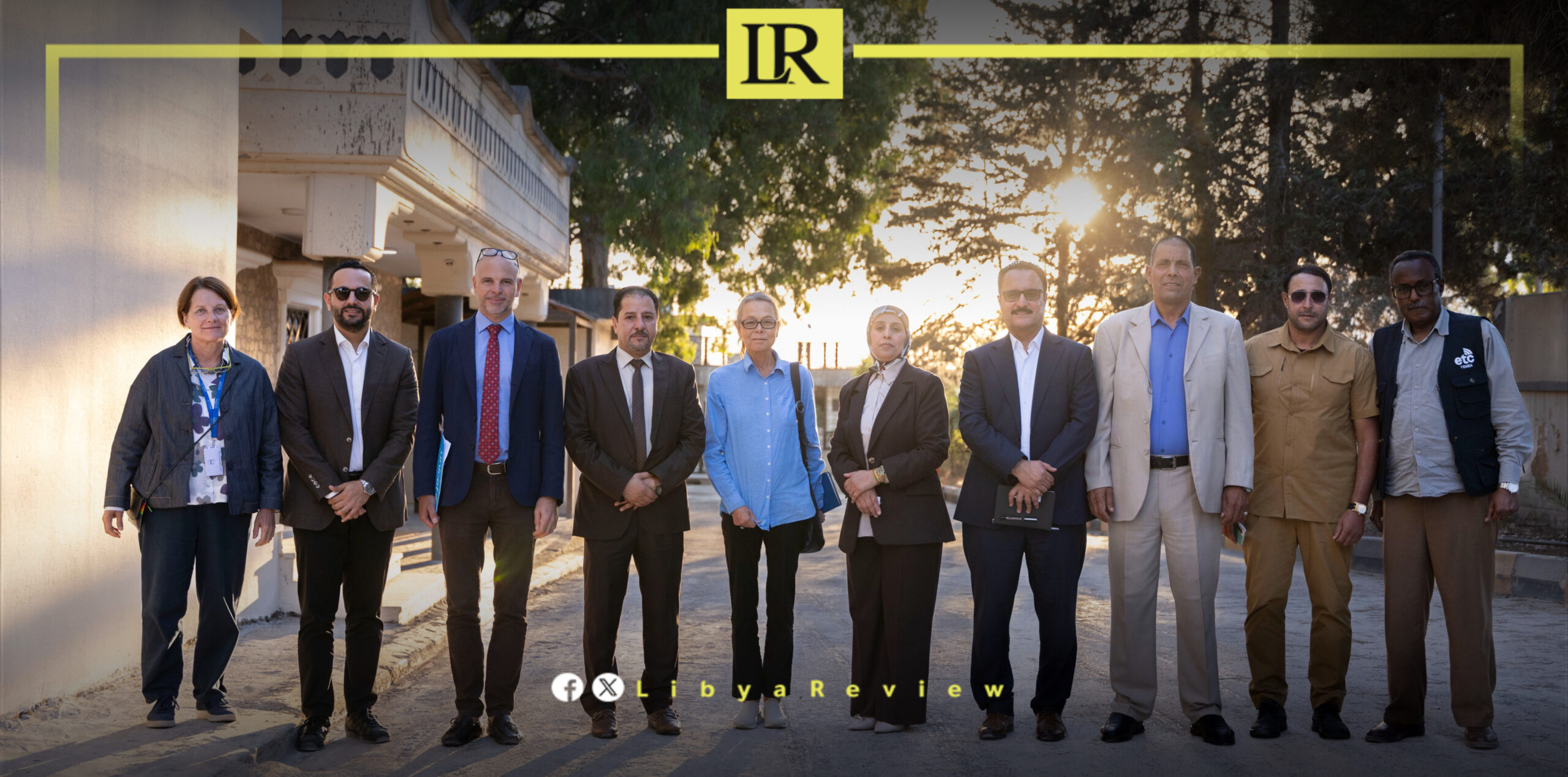
A high-level United Nations delegation has toured major reconstruction and development projects in the eastern Libyan city of Derna, praising the pace of implementation and the quality of work as rebuilding efforts continue following the devastating impact of Storm Daniel.
The visit was organized under the direction of Belgasem Khalifa Haftar, Director General of the Libyan Development and Reconstruction Fund. The delegation was received by Saad Al-Zawi, Supervisor of Derna Projects, who briefed officials on the progress of ongoing reconstruction initiatives and the city’s long-term development plans.
The delegation included representatives from the United Nations Support Mission in Libya (UNSMIL), the International Organization for Migration (IOM), the United Nations Development Programme (UNDP), the United Nations Population Fund (UNFPA), the United Nations Office on Drugs and Crime (UNODC), UNICEF, the UN High Commissioner for Refugees (UNHCR), the World Food Programme (WFP), and the Office of the UN Resident Coordinator in Libya.
During the visit, the delegation toured several of Derna’s flagship reconstruction projects, including Al-Salam District, the Derna Valley rehabilitation project, the Derna Corniche redevelopment, Al-Sahaba Mosque, the King Idris I Library (Qasr Al-Zohour), and the Daniel Storm Martyrs Cemetery. Officials received detailed briefings on construction progress, engineering works, and restoration efforts across the city.
According to the Libya Development and Reconstruction Fund, members of the delegation praised the quality of construction and the rapid pace of implementation, describing the projects as an important contribution to restoring essential infrastructure, revitalizing public spaces, improving public services, and strengthening stability in Derna.
The delegation also noted that reconstruction efforts seek to preserve Derna’s historical and cultural heritage while modernizing infrastructure and improving living conditions for residents.
At the conclusion of the visit, UN representatives emphasized the importance of continued cooperation with Libyan institutions to support reconstruction, sustainable development, and institutional capacity building. They also commended the Libya Development and Reconstruction Fund’s comprehensive approach to rebuilding infrastructure and restoring services in one of Libya’s most severely affected cities.

