
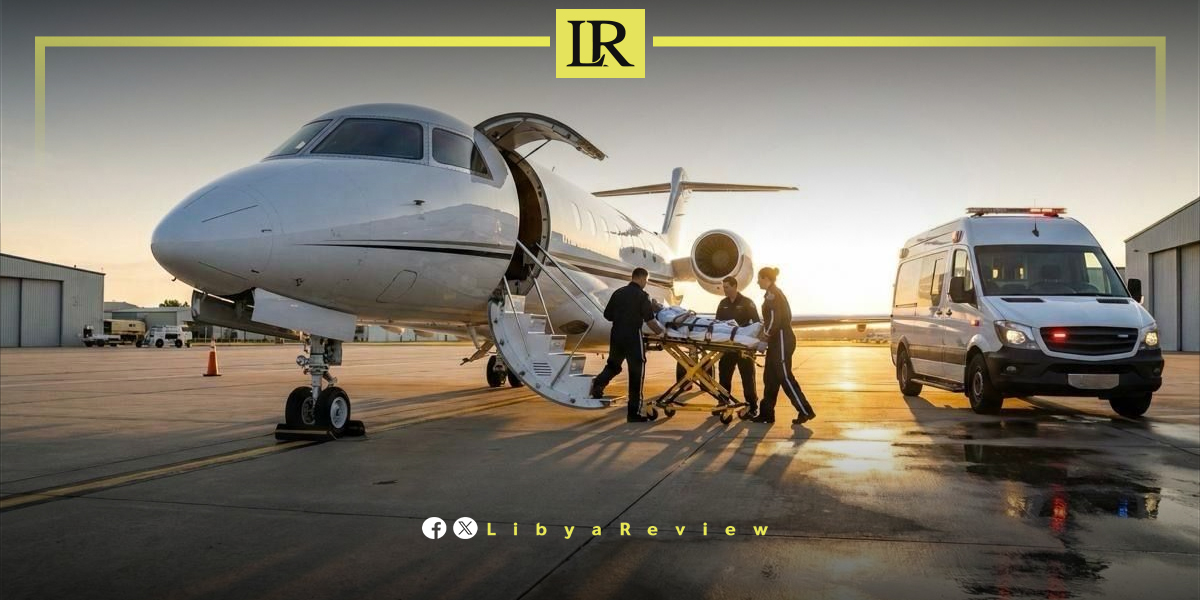
Libya, Italy, and Tunisia are preparing to launch a new cross-border medical air evacuation service aimed at improving emergency healthcare and strengthening regional medical cooperation across the central Mediterranean.
The initiative, known as Morvan Air Link, will establish a permanent medical air transport network connecting the three countries, providing faster emergency evacuations and improving access to specialized healthcare for patients requiring urgent treatment.
According to Italy’s Nova news agency, the project is designed to create a long-term framework for healthcare cooperation between the northern and southern shores of the Mediterranean. Organizers say it will be particularly valuable for patients living in remote, rural, and desert regions of North Africa, where access to advanced medical facilities is often limited.
The service will operate using a specially equipped twin-engine aircraft configured for medical evacuation missions. The aircraft will carry one medical stretcher and four seats for medical staff or accompanying family members, while its standard passenger configuration accommodates up to nine people.
With an operational range of 1,500 to 1,700 kilometers, the aircraft will be capable of transporting patients within approximately five hours to hospitals in Tripoli, medical centers in Tunisia, or specialized healthcare facilities across Europe for advanced surgeries and complex medical treatment.
Project organizers said one of the main advantages of the aircraft is its relatively low operating cost, estimated at around €600 per flight hour, reducing expenses by between 60% and 70% compared with conventional air ambulance aircraft. The aircraft also requires only one pilot and is available in a version capable of operating from short or partially prepared runways, allowing emergency medical teams to reach isolated communities with limited aviation infrastructure.
According to Nova, the project’s success will depend on several factors, including the conclusion of formal agreements between Libya, Italy, and Tunisia, the harmonization of medical protocols, and the resolution of regulatory issues governing international medical flights.
Organizers also stressed the need to ensure long-term financial sustainability and operational continuity, particularly given the security challenges that continue to affect parts of Libya. If successfully implemented, Morvan Air Link could become a model for regional medical cooperation, improving emergency healthcare access while strengthening collaboration between Mediterranean countries.

