
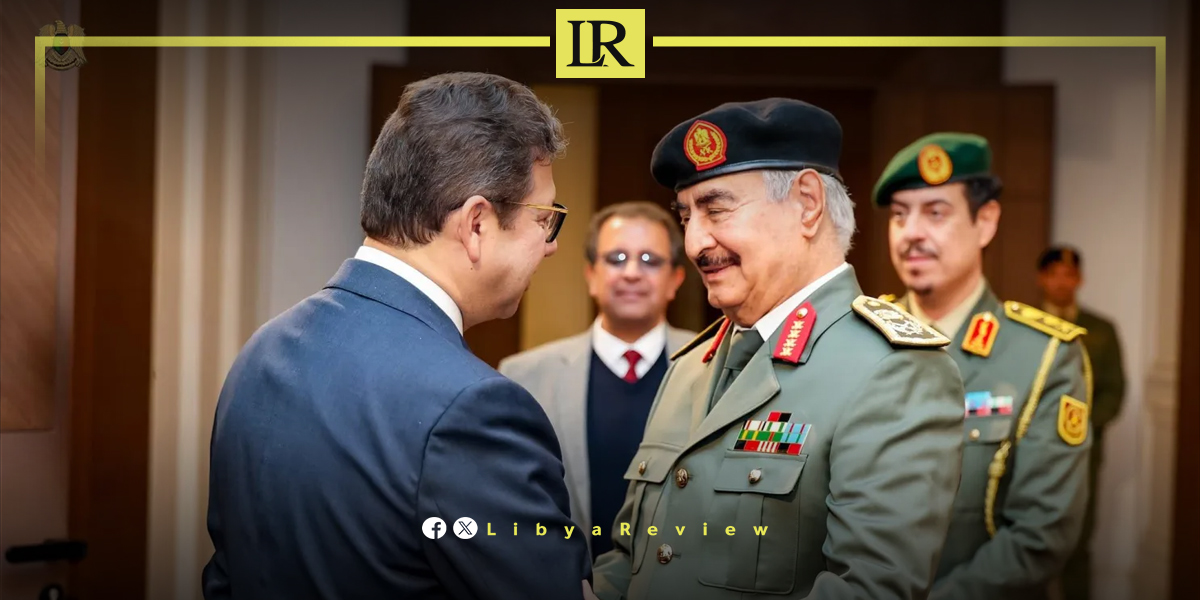
Egypt has intensified its diplomatic and security engagement with both eastern and western Libya, signaling a broader effort to strengthen its role in supporting a political settlement while maintaining strategic relations with all major Libyan stakeholders.
In recent months, Cairo has expanded its contacts with officials from the outgoing Government of National Unity in Tripoli while preserving its long-standing partnership with authorities in eastern Libya.
Egyptian officials have repeatedly emphasized that their objective is to support Libya’s unity, encourage the unification of state institutions, and help create the conditions necessary for holding presidential and parliamentary elections.
The renewed engagement has included several high-level meetings led by Egypt’s General Intelligence Chief, Major General Hassan Rashad.
During the past two months, Rashad met senior officials from the outgoing Government of National Unity in Tripoli, while also holding discussions in Cairo with Lieutenant General Saddam Haftar and Masad Boulos, senior adviser to US President Donald Trump for Arab and Middle Eastern and African affairs.
Egypt’s diplomatic outreach has also extended to Washington. Earlier this month, Egyptian Foreign Minister Badr Abdelatty held talks with Boulos, reaffirming Cairo’s support for US and international efforts aimed at unifying Libya’s institutions and advancing the country’s political process.
Egyptian security analyst Khaled Okasha said Cairo views Libya’s stability as a strategic priority directly linked to Egypt’s national security.
He noted that stronger cooperation with Libyan authorities could help address shared challenges, including terrorism, armed groups, human trafficking, illegal migration, and cross-border crime.
According to Okasha, security cooperation between Egypt and western Libya has expanded in recent months, particularly in counterterrorism coordination and efforts to prevent both countries from being used as bases for activities threatening regional stability. He added that a unified Libyan state would create greater opportunities for security and military cooperation.
Libyan political figures have also pointed to growing acceptance of Egypt’s broader engagement across the country.
They argue that Cairo’s dialogue with political actors in both eastern and western Libya reflects a balanced approach that could help narrow differences between rival factions and support ongoing international mediation efforts.
Egypt has consistently maintained that any lasting solution to Libya’s crisis must preserve the country’s sovereignty and territorial integrity, unify its institutions, and be based on a Libyan-led political process that culminates in free and inclusive national elections.

