
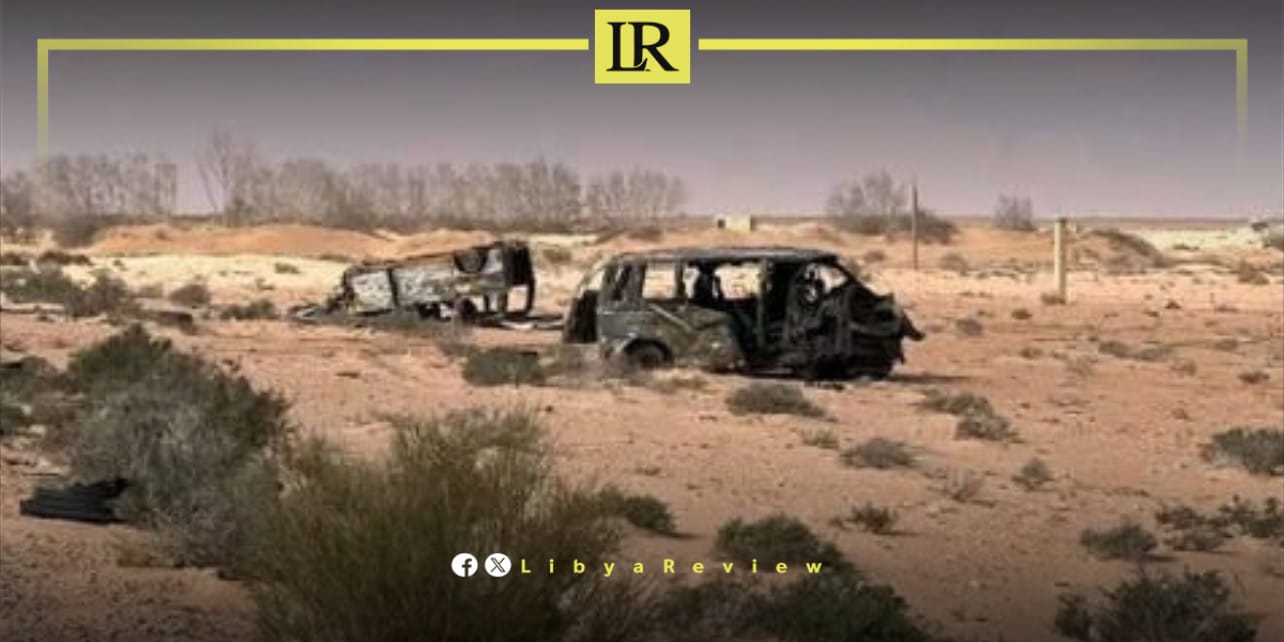
Libyan security authorities announced on Monday that ten people were killed in a devastating road accident on the highway linking the Wushka area to Abu Grein, west of the city of Sirte.
According to a statement issued by the Abu Grein traffic unit, the incident was caused by a violent collision between two minibus vehicles locally known as “Vito”. The impact triggered a massive fire, engulfing both vehicles and leading to the death of all passengers on board, numbering ten, after the cars were completely burned.
Images circulating on social media showed the vehicles reduced to charred metal, with wheels and seats entirely destroyed. Ash, blackened debris and twisted metal parts were scattered around the crash site, highlighting the intensity of the blaze and the force of the collision.
In comments to local media, the head of the Abu Grein municipal branch, Mohamed Al-Jali, confirmed that the victims were transported to Misrata hospital. He added that the deceased included both Libyan and Egyptian nationals, without providing further details on their identities.
The tragic accident has once again brought road safety in Libya into sharp focus, amid the frequent occurrence of fatal traffic incidents across the country. Local residents and civil society groups have repeatedly called for stricter traffic monitoring, tougher enforcement of road laws and urgent improvements to road infrastructure.
Libya records one of the highest rates of traffic accidents relative to its population. Some estimates indicate that an average of five people lose their lives every day due to road crashes nationwide.
Official figures released by the Libyan Ministry of Interior show that traffic accidents claimed the lives of 2,460 people in 2024, ranking Libya as the country with the second-highest road death rate in the world. Authorities attribute the alarming numbers to widespread speeding, poor compliance with traffic regulations, deteriorating road conditions and neglect of vehicle maintenance.
The latest incident underscores the growing need for comprehensive road safety reforms to prevent further loss of life on Libya’s highways.

