
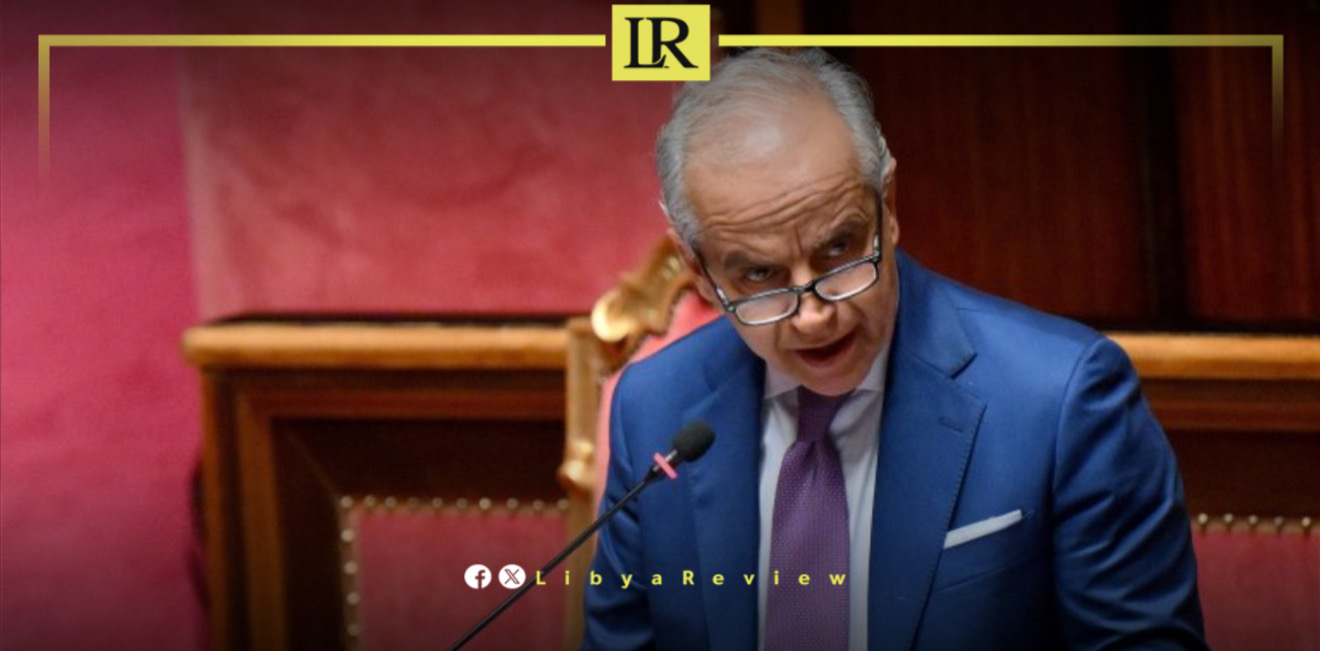
Italy’s Interior Minister Matteo Piantedosi announced that Libyan authorities have prevented 2,568 irregular migration attempts since the beginning of 2026, highlighting Libya’s growing role in efforts to limit migrant departures across the Central Mediterranean.
In a statement posted on the social media platform X, Piantedosi said the interceptions are part of a broader strategy implemented with Italy’s support to combat human trafficking networks and reduce irregular migration toward Europe.
He added that Tunisian authorities also prevented 2,528 attempted crossings during the same period.
The figures reflect ongoing security cooperation between Italy and Libya aimed at limiting the departure of migrant boats from North African shores. Libya has long been considered one of the main departure points for migrants attempting to reach Europe through the Mediterranean Sea.
Speaking earlier during the 18th Conference of Italian Ambassadors held in Rome, Piantedosi emphasized that irregular migration arrivals to Italy have declined significantly for the second consecutive year.
According to the minister, migrant flows to Italy have dropped by more than 60 percent, which he described as evidence that international cooperation is producing tangible results.
Italy and Libya have maintained security coordination since 2017, when the two sides signed agreements focused on controlling migration routes and dismantling smuggling networks operating along Libya’s coastline.
In recent months, Rome has expanded its engagement to include eastern Libya as part of a broader strategy to work with different authorities across the country.
In February, Piantedosi met with Khalifa Haftar to discuss relaunching cooperation between Italy and eastern Libya on security, economic development, and migration management.
According to the Italian Interior Ministry, the talks focused particularly on combating transnational criminal organizations involved in human trafficking and terrorism.
Italy has increasingly pursued what it describes as a policy of “parallel engagement” with Libya’s political and security actors, seeking practical cooperation on issues such as border control and migration management.
Despite occasional diplomatic tensions — including an incident in July 2025 when a European Union delegation that included Piantedosi was prevented from entering Benghazi — Rome continues to view Libya as a central partner in its strategy to control migration across the Mediterranean.

