
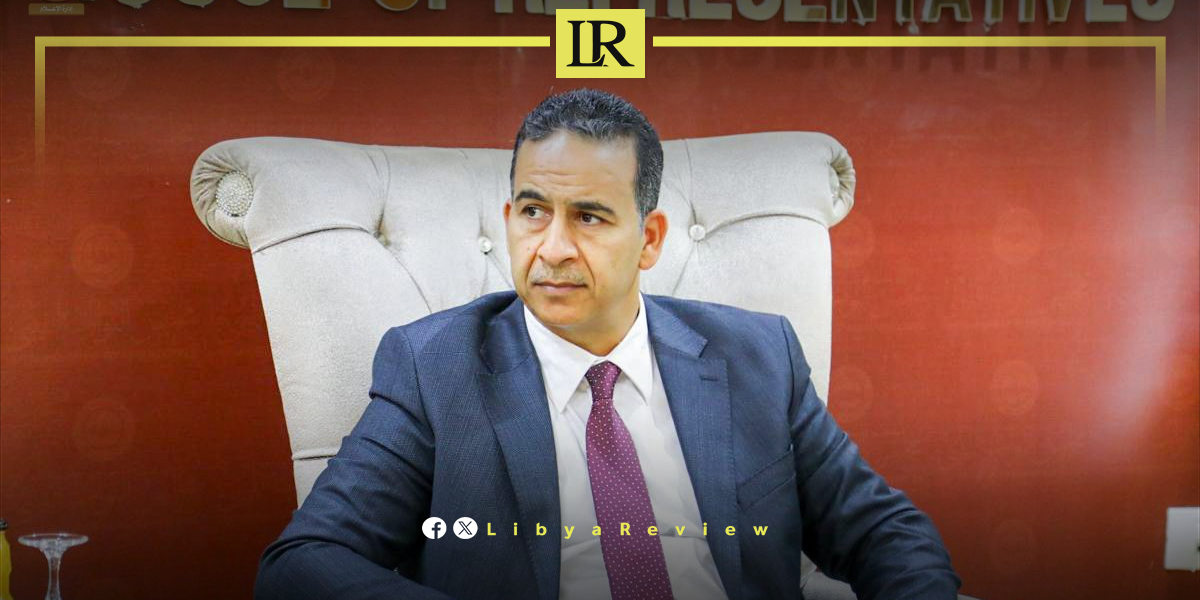
First Deputy Speaker of the Libyan House of Representatives Fawzi Al-Nuwairi has voiced firm opposition to any foreign interference in Libya’s economic and financial affairs, following a meeting between Central Bank of Libya Governor Naji Issa and US Chargé d’Affaires Jeremy Berndt.
Al-Nuwairi said the Libyan House of Representatives rejects any practices or meetings that could be interpreted as attempts to influence sovereign economic decisions. His remarks came after the Central Bank governor discussed financial and economic developments with the US diplomat, including efforts to implement a unified public spending framework.
Libya’s Economic File Is a National Responsibility
Al-Nuwairi stressed that managing Libya’s economic and financial file is a purely national responsibility governed by constitutional and legal frameworks. He said the legislative authority has a central role in oversight and lawmaking, especially on issues linked to public finance and sovereign decision-making.
He warned that Libya’s sensitive economic file should not be opened to any external influence or guidance, regardless of the justification.
Call for Support Through UN Framework
The senior lawmaker said any international support or assistance should be channelled through the United Nations Support Mission in Libya, describing it as the recognised international framework for engagement with the country.
He also cautioned Libya’s sovereign institutions, particularly the Central Bank of Libya, against entering into arrangements or understandings that could be seen as undermining the independence of Libyan decision-making.
Central Bank Meeting Raises Political Attention
The Central Bank of Libya said Governor Naji Issa and US Chargé d’Affaires Jeremy Berndt reviewed financial and economic developments, reforms aimed at strengthening financial stability, and steps to coordinate with Libyan institutions on wider economic reforms.
The talks also addressed support for the National Oil Corporation’s efforts to increase production and secure the financial resources needed for the sector.
Al-Nuwairi’s comments underline continuing political sensitivity around Libya’s economic governance, public spending, and the role of foreign partners in efforts to stabilise the country’s divided institutions.

