
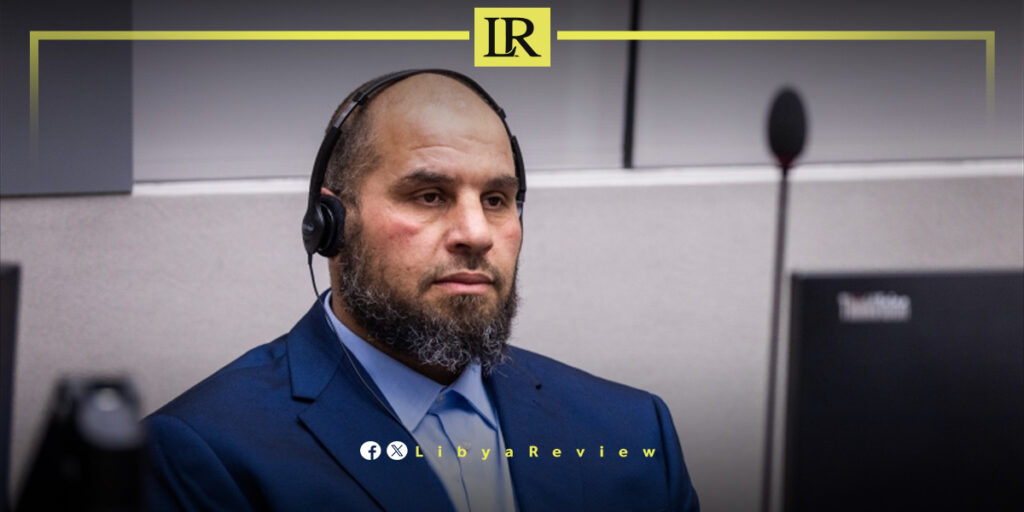
The International Criminal Court has confirmed 17 charges against Libyan national Khaled Mohammed Ali Al-Hishri over alleged war crimes and crimes against humanity committed against detainees at Mitiga prison in Tripoli between May 2014 and June 30, 2020.
During a hearing on Tuesday, the ICC Pre-Trial Chamber I listed the charges, which include imprisonment and severe deprivation of liberty, torture, cruel treatment, attacks on personal dignity and other inhumane acts committed against 945 detainees.
The court also approved charges of rape against at least 10 detainees and sexual violence against 49 others. Additional accusations include forced stripping, sexually motivated torture, degrading searches, murder, attempted murder of 89 detainees and the enslavement of 133 prisoners.
According to the court, the victims included Libyans as well as migrants from sub-Saharan African countries who were allegedly subjected to torture, coercion, forced labour and political, social and religious persecution.
The ICC stated that Al-Hishri acted both directly and in coordination with senior figures linked to the Special Deterrence Force, including Abdel Raouf Kara, Osama Al-Najim and Al-Dhawi Nazzam. Prosecutors further alleged that prison personnel were used to commit abuses against detained women, girls and children.
During the hearing, ICC Deputy Prosecutor Nazhat Shameem Khan described Al-Hishri as a “notorious torturer” at Mitiga prison and said members of the Special Deterrence Force operated without fear of punishment amid Libya’s post-2011 security collapse and armed conflict.
The prosecution presented testimonies from former detainees who described severe psychological and physical abuse inside the prison. One former detainee said the humiliation left “deep scars,” while another stated he would “prefer death” over returning to the facility.
Al-Hishri’s lead defence lawyer, Egyptian attorney Yasser Hassan, argued before the court that Mitiga prison operated under Libya’s official judicial and governmental institutions. He said the Special Deterrence Force was a state entity established by Libyan authorities rather than an armed militia.
Hassan also argued that the ICC had failed to investigate many other crimes committed during Libya’s prolonged conflict since 2011 and claimed the charges against his client did not align with United Nations Security Council Resolution 1970.

