
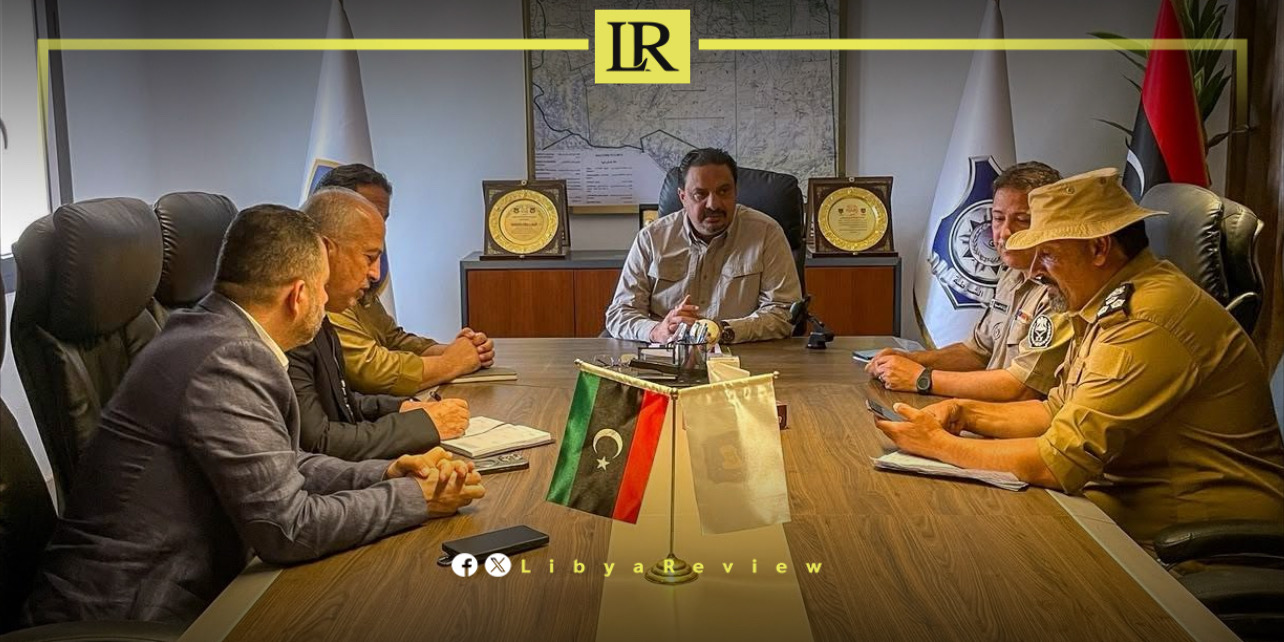
Libya’s Anti-Illegal Migration Agency has held talks with representatives of the accredited Syrian community to discuss the legal status of Syrian nationals in the country and ongoing deportation procedures for those found to be in violation of residency laws.
The meeting was chaired by Major General Salah Mahmoud Al-Khafifi, head of the agency, and focused on strengthening cooperation and coordination with Syrian community representatives. The discussions addressed the completion of legal procedures for Syrian arrivals in Libya, with the aim of regulating their status in line with applicable laws and administrative regulations.
The meeting also reviewed arrangements related to the deportation of Syrian nationals who are in violation of legal residency requirements. Officials discussed ways to ease obstacles, speed up procedures, and facilitate voluntary and organised returns in coordination with relevant authorities.
Al-Khafifi stressed the importance of continued direct communication with representatives of foreign communities, saying such coordination helps accelerate legal procedures, resolve pending cases, and ensure that deportation and administrative regulation processes are carried out in an organised and lawful manner.
He also underlined the need to respect humanitarian considerations during the implementation of these measures, particularly in cases involving vulnerable migrants or individuals requiring additional support.
The agency said the meeting forms part of a series of regular consultations held with diplomatic missions and foreign community representatives. These meetings aim to improve cooperation, support migration management efforts, and speed up deportation procedures within approved legal and humanitarian frameworks.
Libya remains a major transit and destination country for migrants from across Africa, the Middle East, and Asia. Authorities have repeatedly said they are working to organise the status of foreign nationals, address irregular migration, and coordinate with embassies and community representatives to manage return procedures more effectively.

