
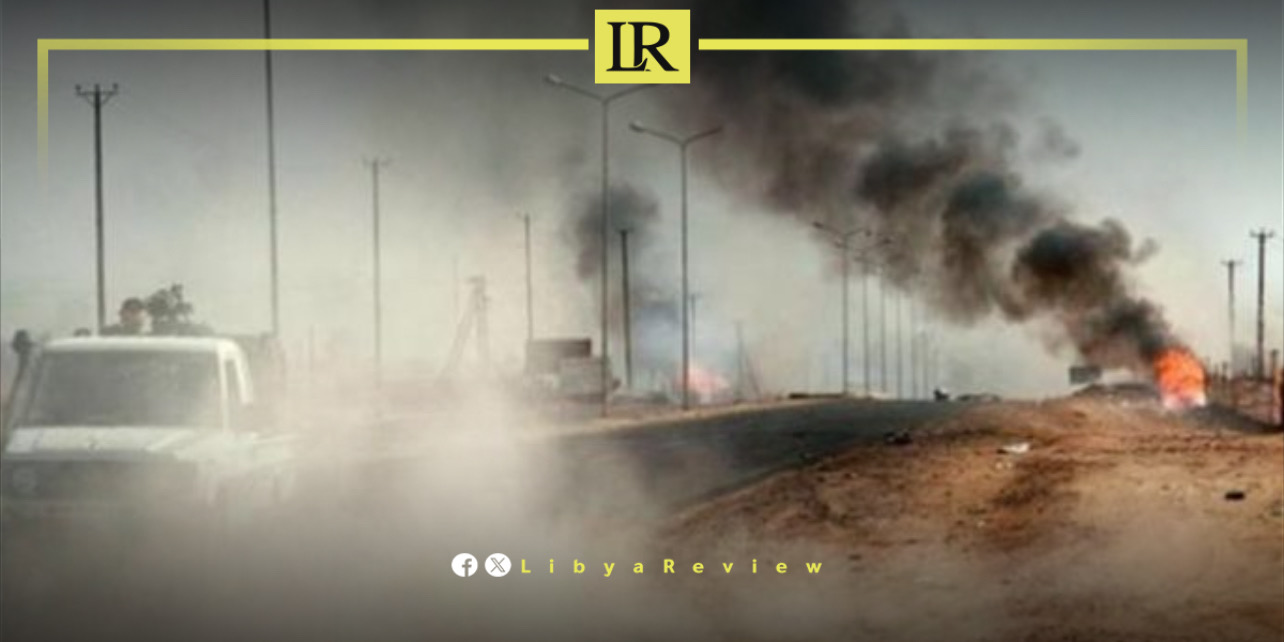
At least three people were killed after armed clashes erupted on Tuesday in the Bir Tarfas area south of Al Zawiya, marking the latest outbreak of violence in one of western Libya’s most volatile regions.
According to local sources, the fighting involved forces affiliated with the Al-Silaa Battalion and rival armed groups linked to Mohamed Al-Shalabi and Rabie Al-Fanouta. The confrontation quickly escalated into intense exchanges of fire, resulting in casualties and significant damage to military assets and facilities.
Sources reported that forces aligned with the Al-Silaa Battalion succeeded in capturing several military vehicles belonging to the opposing side during the clashes. The group also allegedly set fire to multiple military positions and operational sites in the Bir Tarfas area, further intensifying tensions on the ground.
The fighting continued intermittently throughout the day, raising fears of a broader escalation in and around Al Zawiya. Residents expressed concern over the deteriorating security situation, particularly given the city’s history of recurring confrontations between rival armed factions competing for influence and control.
No official statement had been issued by the Government of National Unity regarding the clashes or the reported casualties. The absence of an immediate response has fueled criticism from local observers, who argue that the continuing violence reflects persistent security challenges in western Libya.
The renewed unrest comes at a sensitive time for the country, as efforts to stabilize the security landscape and advance political reconciliation continue to face significant obstacles. Analysts warn that repeated armed confrontations undermine confidence in state institutions and complicate broader efforts to establish lasting stability.
Separately, discussions over military affairs and security cooperation remain active. A senior Turkish delegation visited Tripoli this week and held meetings with Libyan military officials to discuss defense cooperation, military training programs, and initiatives aimed at strengthening security institutions. The talks also focused on supporting stability and advancing efforts to unify Libya’s military structure.

