
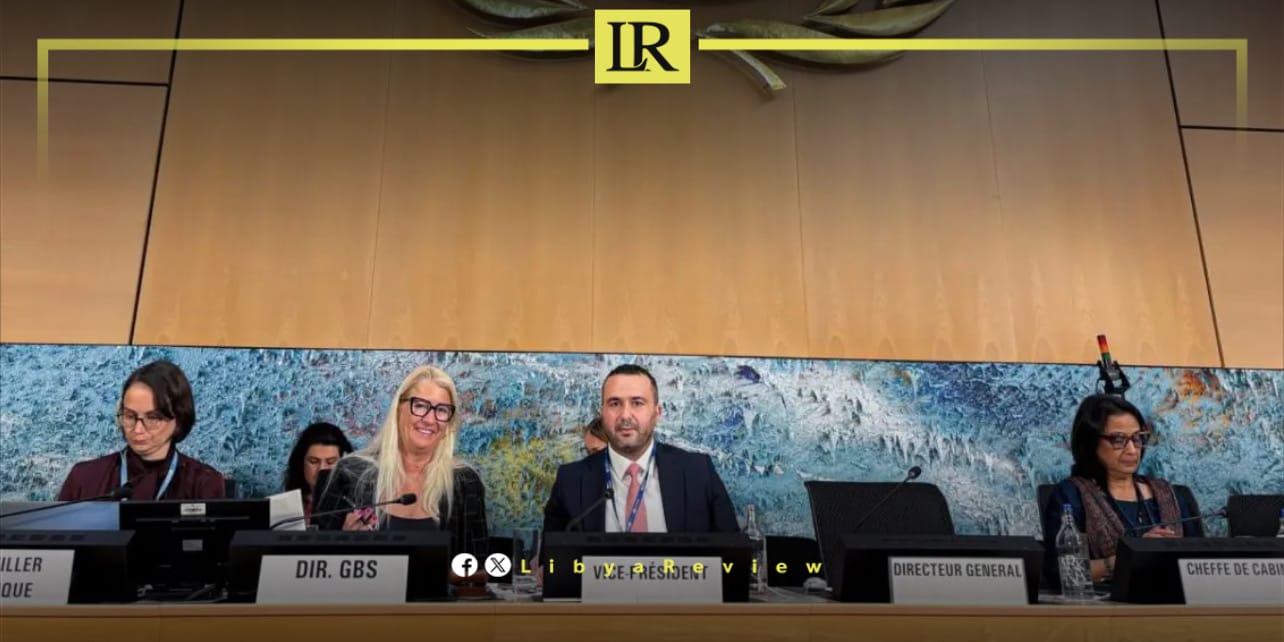
Libya has chaired the General Committee of the World Health Assembly for the first time in its history, marking a major milestone in the country’s participation within the World Health Organization.
The session was chaired by Libya’s Minister of Health in the Government of National Unity, Mohamed Al-Ghouj, during the 79th World Health Assembly in Geneva. The move represents an unprecedented achievement for Libya inside the WHO and reflects its growing role in international health diplomacy.
The General Committee plays a central role in organising the work of the World Health Assembly. It is responsible for approving the agenda, coordinating discussions, and managing decisions related to major global health priorities. The committee brings together health ministers and representatives of WHO member states to address pressing health challenges.
Libya’s leadership of the committee reflects increasing international confidence in its ability to contribute to global health policy discussions. It also signals a stronger Libyan presence within multilateral health institutions at a time when public health cooperation remains a major international priority.
The achievement comes alongside Libya’s election as Vice-President of the World Health Assembly, further strengthening its position within the WHO framework. Libya has also chaired the 64th session of the Council of Arab Health Ministers, reinforcing its role in both regional and international health platforms.
During the same session, Libya was also honoured with a certificate confirming that the country is free from trachoma, a neglected tropical disease that can cause blindness. The recognition was granted in appreciation of Libya’s national efforts to combat the disease, improve prevention programmes, strengthen epidemiological monitoring, and meet international standards for disease elimination.
The WHO recognition represents a significant public health success for Libya. It highlights the work carried out by national health authorities to eliminate a disease that has affected vulnerable communities in many parts of the world.
Libya’s chairmanship of the General Committee, its election to a senior role at the World Health Assembly, and its recognition for eliminating trachoma together mark an important moment for the country’s health sector. These developments strengthen Libya’s standing in global health governance and reflect a broader effort to increase its role in international cooperation.

