
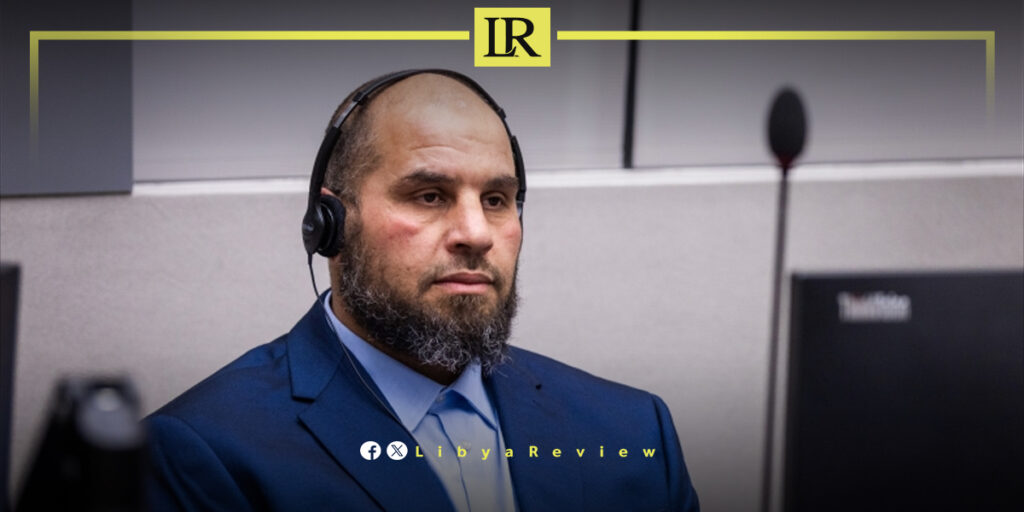
The International Criminal Court has approved the participation of 54 victims in the case against Libyan suspect Khaled Mohamed Ali Al-Hishri, as hearings continue in The Hague over allegations of war crimes and crimes against humanity committed at Mitiga Prison in Tripoli.
The hearings, which opened on Tuesday before the ICC’s Pre-Trial Chamber I, are focused on confirming charges against Al-Hishri, a former senior official at Mitiga Prison. Proceedings are set to continue through Thursday.
According to international media reports, several victims and former detainees travelled to The Hague to attend the hearings, including refugees from South Sudan currently residing in Europe.
One of the participants, Lam Majok, said he fled conflict in South Sudan before being detained multiple times in Libya, where he described enduring years of abuse and suffering. Speaking during the hearings, he said his experience in Libya felt “like being burned by a fire with no escape.”
Majok said he attempted to cross the Mediterranean Sea six times before eventually seeking protection through the United Nations. He added that migrants and refugees subjected to violence in Libya continue to demand justice and accountability.
ICC prosecutors allege that systematic torture, sexual violence, persecution and enslavement took place at Mitiga Prison between 2014 and 2020. According to prosecution documents, at least 5,000 civilians were subjected to severe abuse inside the facility during that period.
Prosecutor Hisham Mourad told the court on Wednesday that Al-Hishri was directly involved in all 17 charges brought against him, which concern crimes committed against 159 identified victims. He argued that the accused exercised broad authority within the Special Deterrence Force and played a central role in creating what prosecutors described as a “culture of impunity” inside the prison.
The prosecution further claimed that Al-Hishri acted as the second most influential figure in the Special Deterrence Force after Abdulraouf Kara, citing testimony from at least 20 witnesses.
Defence lawyers, however, argued that the Special Deterrence Force was an official state institution operating under Libyan authorities, and said the ICC case does not align with the mandate established under United Nations Security Council Resolution 1970.

