
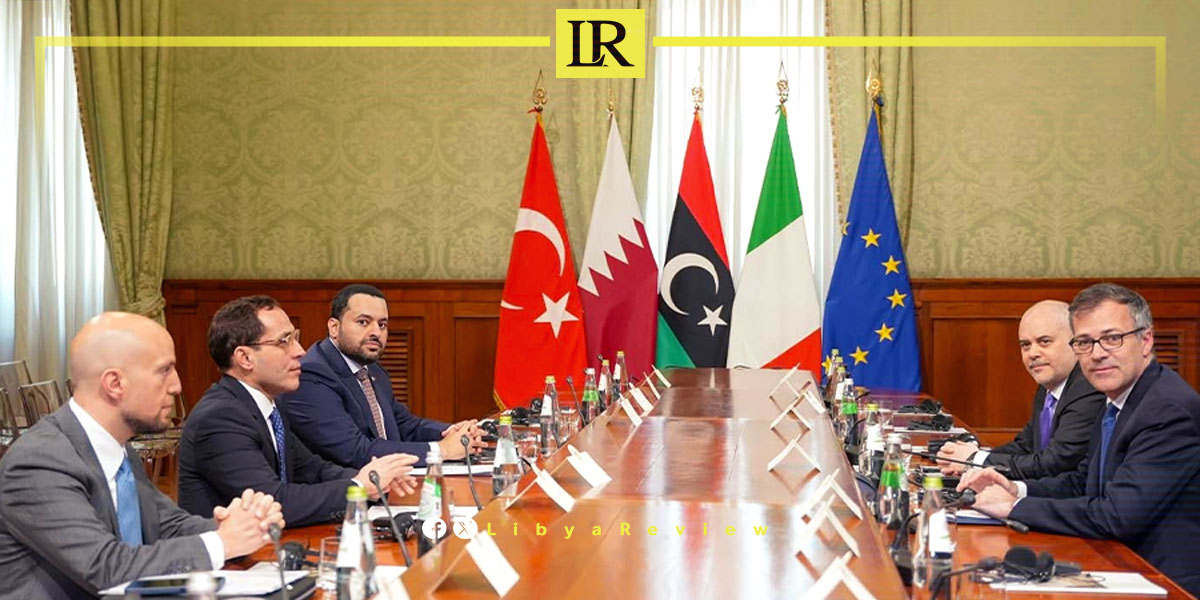
Libya reaffirmed its rejection of any plans aimed at settling migrants inside the country during a four-party meeting on irregular migration held in Rome, describing migration as a sovereign, security, and humanitarian issue directly linked to Libya’s national stability.
The Libyan delegation stressed that Libya cannot become a destination for migrant resettlement and called instead for a broader international partnership focused on strengthening Libyan institutions and addressing the root causes of migration across Africa.
The delegation included National Security Adviser Ibrahim Dbaiba and Minister of State for Communication and Political Affairs Walid El Lafi, who met with senior security officials and national security advisers from Italy, Turkey, and Qatar.
Libyan officials emphasized that managing irregular migration requires direct support for Libya’s security institutions, particularly the Ministries of Defense and Interior, through logistical assistance, technical cooperation, and expanded border security capabilities.
The delegation also highlighted recent measures implemented by Libyan authorities, including strengthening coast guard operations and intensifying security campaigns targeting smuggling and human trafficking networks operating across the country.
Officials argued that migration pressures cannot be solved through security measures alone and called for increased international investment in development and stability programs within migrant-origin countries. Libya additionally urged stronger support for voluntary return initiatives aimed at reducing dangerous migration routes across North Africa and the Mediterranean.
Participants in the Rome meeting stressed the importance of maintaining political and technical coordination between the four countries and discussed expanding logistical and operational assistance provided to Libya in combating irregular migration.
The discussions come as Libya continues to face mounting pressure from growing migration flows toward Europe, with thousands of migrants using Libyan territory as a transit route across the Mediterranean.

