
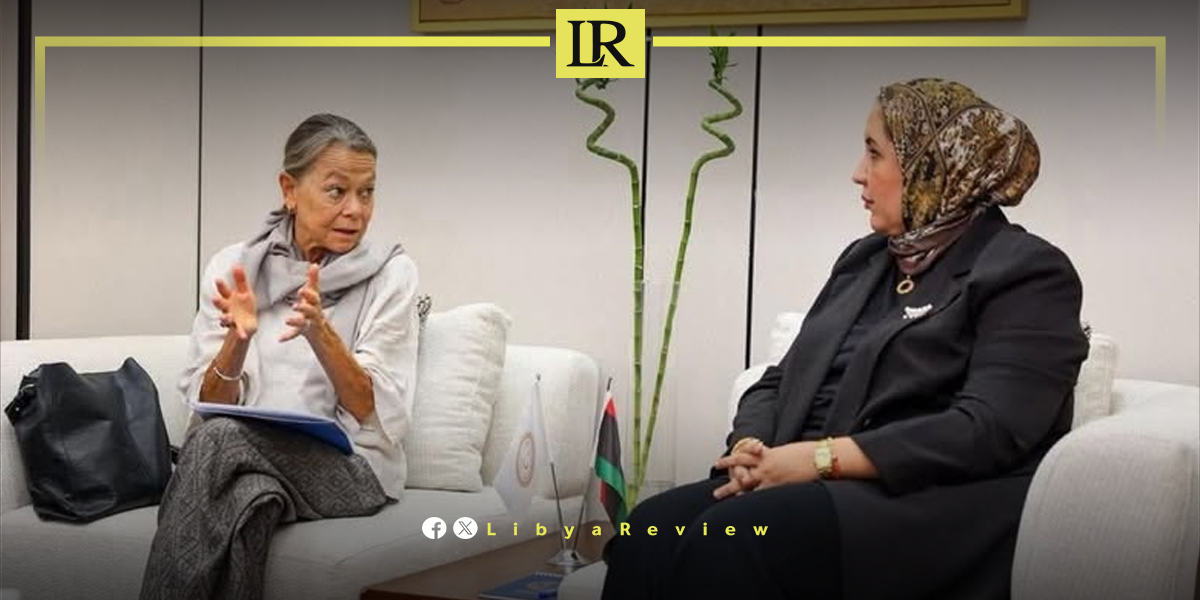
The United Nations reaffirmed its commitment to supporting Libya’s efforts to empower women and to strengthen partnerships to promote sustainable development and build more inclusive institutions across the country.
The statement was made during a meeting between Ulrika Richardson, Deputy Special Representative of the UN Secretary-General and Resident Coordinator in Libya, and Randa Ghareeb, Minister of State for Women’s Affairs in the Government of National Unity.
According to Libyan officials, the discussions focused on expanding opportunities for Libyan women and enhancing their participation in political, economic, and social sectors as part of broader national development efforts.
Randa Ghareeb stressed that strengthening the role of women remains one of the ministry’s main priorities during the current period. She explained that Libya is working on a comprehensive strategy centered on justice and representation, economic empowerment, and social support programs aimed at improving women’s participation in society and protecting their rights.
The minister also emphasized the importance of ensuring that both national and international initiatives related to women’s empowerment produce tangible results capable of improving living conditions and supporting long-term stability and development in Libya.
UN officials reiterated support for programs focused on women’s rights, leadership opportunities, economic inclusion, and social protection, highlighting the importance of strengthening cooperation with Libyan institutions to advance these goals.
Both sides stressed the need for continued coordination between Libya and international organizations to build effective partnerships that contribute to sustainable development and institutional reform while expanding women’s roles in decision-making and public life.
The discussions come as Libya continues to face political and economic challenges that have affected women’s participation in various sectors over recent years.
International organizations have repeatedly called for stronger representation of women in political institutions, peacebuilding initiatives, and development programs, arguing that women’s participation is essential for strengthening social cohesion and achieving long-term stability.

