
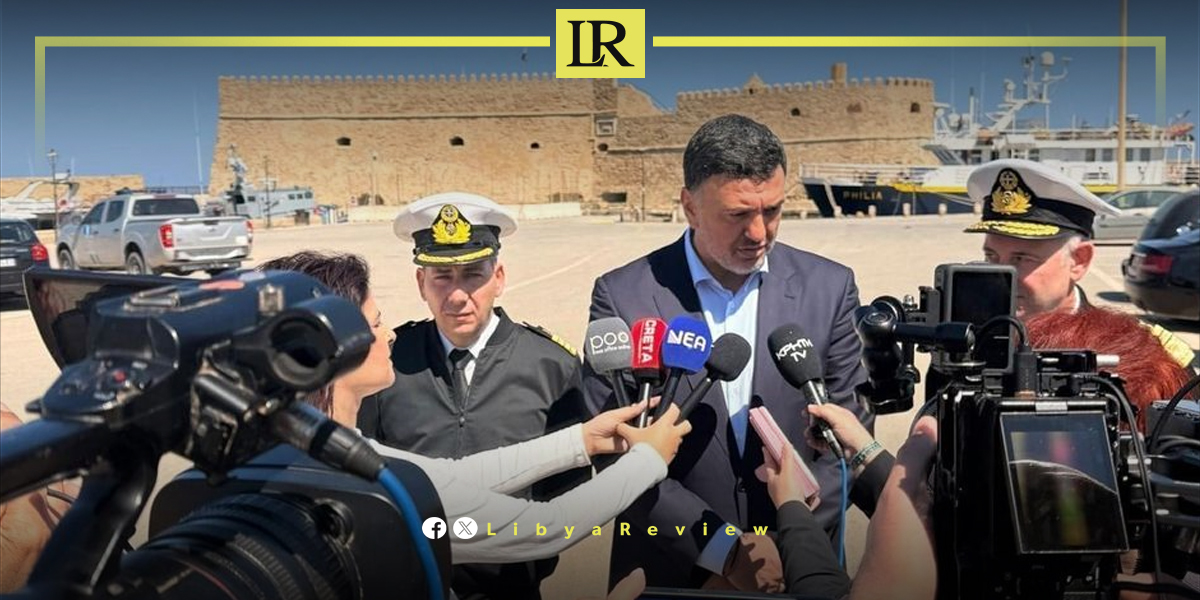
Greece has dispatched senior coast guard officials to Libya in a bid to strengthen cooperation and curb the rising flow of irregular migrants heading toward the island of Crete, highlighting growing European concern over migration routes from North Africa.
Greek Minister of Maritime Affairs, Vasilis Kikilias, confirmed that two high-ranking coast guard officers have been sent to Libya following coordination with the Foreign Ministry. He added that a third officer will be permanently stationed at the Greek consulate in Libya to improve coordination with Libyan coast guard authorities.
The move comes as Greece seeks to address increasing migration flows departing from eastern Libya toward southern Crete. Officials in Athens are aiming to enhance direct communication and operational coordination in order to intercept migrant boats closer to Libyan shores.
Kikilias stated that Greece is working with Libyan authorities to manage migration at its source, emphasizing the importance of cooperation in limiting departures. He noted that tackling the issue early, before migrants reach international waters, is key to reducing pressure on Greek islands.
Crete has recently emerged as a major entry point for migrants attempting to reach the European Union. According to Greek data, around 2,300 migrants have arrived on the island’s southern coast so far this year, accounting for roughly one-third of all irregular arrivals in Greece since January.
The shift toward Crete reflects changing migration patterns, as routes from Libya become more active. Lesbos, located near Turkey in the eastern Aegean, remains another key destination, though arrivals there have been significantly lower in comparison.
Greek officials have expressed concern over the challenges posed by the longer and more dangerous sea route from Libya, which complicates search and rescue operations. Unlike crossings from Turkey, the distance involved increases risks for migrants while placing additional strain on response capabilities.
Athens has pledged to strengthen border protection and prevent irregular migration, while continuing to call for greater cooperation with transit countries such as Libya.

