
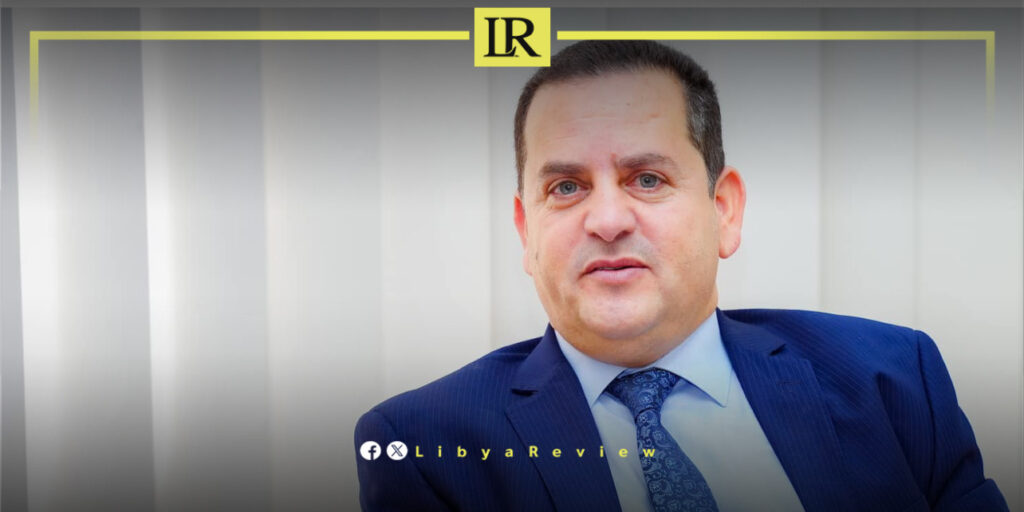
Libya’s Foreign Minister in the parliament-appointed government, Abdel-Hadi Al-Hwaij, has said that unifying the country requires a comprehensive political and institutional process, warning that ongoing division continues to weaken Libya’s regional and international influence.
In an interview with Hespress, Al-Hwaij described the recent agreement between the House of Representatives and the High Council of State on a unified national budget as a “milestone” towards restoring institutional cohesion. He stressed that such progress must be reinforced through a broader framework aimed at unifying the executive authority and consolidating state institutions.
Al-Hwaij noted that Libya’s prolonged political split has limited its ability to play a meaningful role across the Arab, African, and Mediterranean regions. He argued that restoring stability and ending institutional fragmentation are essential for Libya to reclaim its geopolitical position.
On international engagement, the minister reaffirmed that the government led by Osama Hammad supports a constructive role for the United Nations, provided it respects Libya’s sovereignty and national decision-making. He added that any external initiative must facilitate dialogue rather than impose solutions.
Addressing regional diplomacy, Al-Hwaij praised Morocco for its role in hosting Libyan political dialogue and supporting reconciliation efforts. He emphasised that Libya rejects any actions that undermine the sovereignty or territorial integrity of other states, following controversy over a map displayed at a recent conference in Tripoli.
He also highlighted Libya’s interest in strengthening its presence in African institutions, citing the nomination of Youssef Al-Fakhri for the presidency of the Pan-African Parliament as part of efforts to reassert Libya’s continental role.
Al-Hwaij concluded by expressing optimism about Libya-Morocco relations, calling for enhanced cooperation in economic, political, and cultural fields to support long-term regional stability.

