
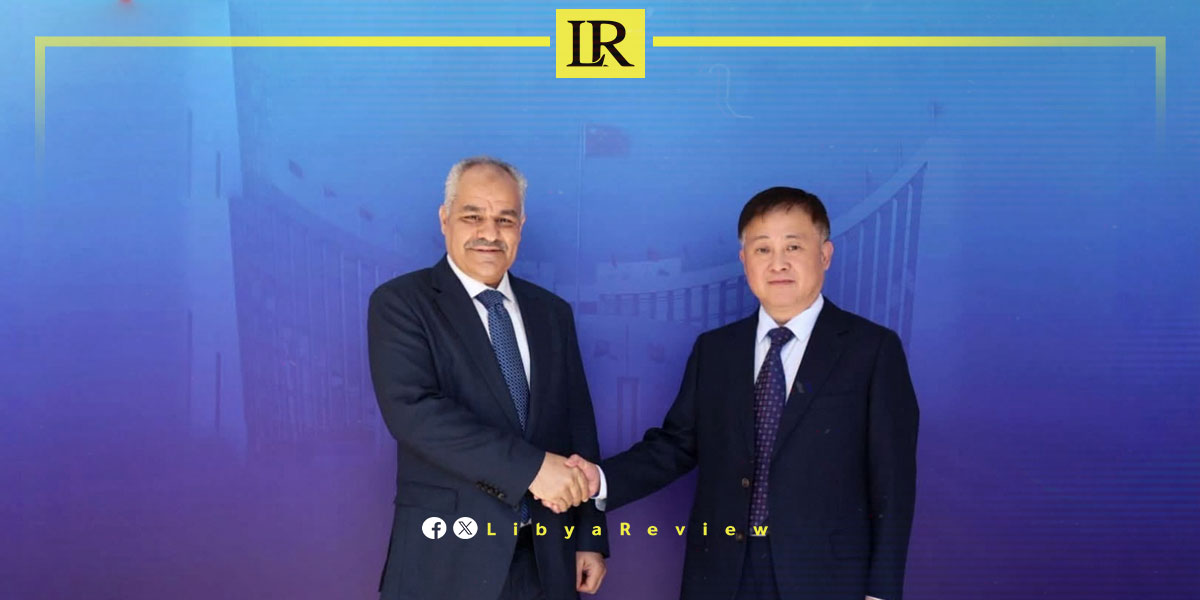
Libya and China have agreed to strengthen banking cooperation by enabling Libyan banks to join China’s Cross-Border Interbank Payment System (CIPS), a move designed to simplify international financial transactions, improve payment efficiency, and support growing trade and investment between the two countries.
The agreement was reached during a meeting in Beijing between Central Bank of Libya Governor Naji Mohamed Issa and People’s Bank of China Governor Pan Gongsheng, where the two sides discussed expanding cooperation across a range of financial and banking sectors.
According to the Central Bank of Libya, connecting Libyan banks to China’s international payment system forms part of its broader strategy to modernize the country’s banking infrastructure and integrate the Libyan financial sector more closely with global payment networks.
Officials said the initiative will facilitate faster and more efficient cross-border transfers, improve settlement procedures between Libyan and Chinese financial institutions, and support commercial transactions between businesses operating in both countries. The agreement is also expected to strengthen Libya’s ability to conduct international financial operations through modern payment platforms.
The discussions extended beyond payment systems to include opportunities for diversifying the Central Bank of Libya’s investment portfolio. Both sides explored the possibility of investing part of Libya’s reserves in China’s bond market as part of the bank’s strategy to broaden its investment instruments and enhance reserve management.
The two central bank governors also discussed cooperation in developing financial infrastructure, expanding digital payment systems, promoting financial technology, and exchanging expertise in banking regulation and modern financial services.
In another outcome of the meeting, Libya and China agreed to launch the first Libyan-Chinese Banking Forum on the sidelines of the 2027 Forum on China-Africa Cooperation (FOCAC). The forum will bring together banks, financial institutions, and business leaders from both countries to strengthen partnerships and explore new investment and financing opportunities.

