
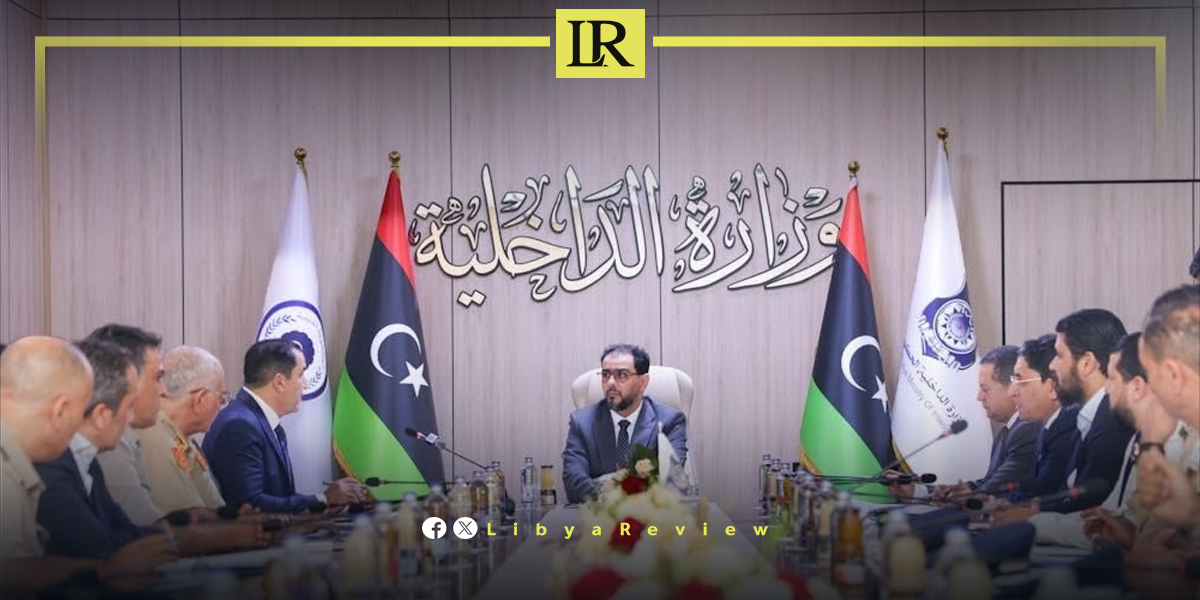
Libyan Prime Minister Osama Hammad chaired the first meeting of the Higher Committee for Monitoring the Situation of Foreign Nationals and Irregular Migrants on Monday, approving a comprehensive package of measures aimed at strengthening border security, regulating migration, and improving coordination among state institutions.
The committee was established under Cabinet Decision No. 107 of 2026 and includes senior officials from the ministries of Interior, Foreign Affairs, Labor, and Health, in addition to representatives from the Internal Security Agency, the General Intelligence Service, the Anti-Illegal Migration Agency, the Passport, Nationality and Foreigners Affairs Authority, the National Development Agency, and the Libyan Red Crescent.
During the meeting, Hammad described irregular migration as a matter of national sovereignty and security, stressing the need to fully implement government decisions, tighten border controls, combat human smuggling networks, and enforce Libya’s immigration laws.
Committee members reviewed progress on voluntary return and deportation programs for irregular migrants, as well as the implementation of Cabinet Decision No. 113 of 2026, which prohibits nationals of several countries from entering Libya as part of broader efforts to regulate migration and strengthen border management.
Officials announced that authorities have deported 117,350 irregular migrants of various nationalities. The committee also reviewed the voluntary return program for Sudanese nationals, which has registered more than 100,000 people, while humanitarian repatriation flights are expected to begin shortly.
The meeting approved a series of executive measures, including reopening and activating official border crossings with neighboring countries in accordance with Libyan law, expanding security checkpoints to prevent the movement of irregular migrants into central and eastern Libya, and introducing new regulations governing residency permits for foreign nationals.
The government also extended the deadline for regularizing the status of foreign workers until the end of the year. A new immigration stamp will grant foreigners entering through official border crossings a two-week period to complete residency procedures. In addition, authorities approved the launch of an electronic platform to manage migration and labor records while unifying residency procedures nationwide.
Other decisions require international organizations operating in Libya to comply with national legislation and actively support voluntary return programs. The committee also approved the immediate deportation of foreigners with security records or contagious diseases, new accommodation standards for unmarried foreign workers, and expanded cooperation with neighboring countries to reduce irregular migration.
Hammad instructed the committee to meet monthly through the end of the year to monitor implementation, assess progress, and strengthen Libya’s long-term migration and border security strategy.

