
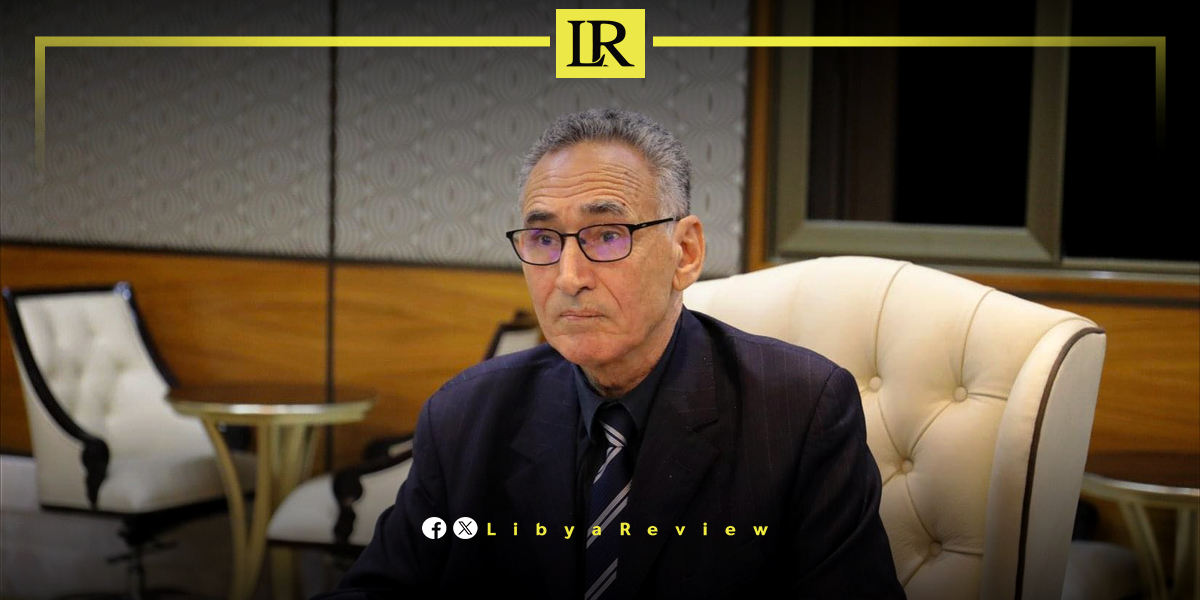
Libyan Minister of Economy and Trade in the Government of National Unity (GNU), Mohamed Ali Al-Hwaij, has described Italy as Libya’s “primary and most important trade partner.” This strategic cooperation, he explained, is essential to diversifying Libya’s economy, traditionally reliant on oil.
In an interview with the Italian news agency Nova during Tripoli Media Days, Al-Hwaij detailed Libya’s ongoing efforts to reduce its dependence on oil by focusing on diversification in agriculture, particularly olive and wheat production, as well as in industry. He revealed that an Italian company, a leader in the wheat sector with operations across North Africa, is exploring the possibility of launching a major agri-industrial project in Libya.
Economic Growth Amid Challenges
Despite Libya’s challenging circumstances, the economy is showing significant growth, ranging between 8% and 13%, Al-Hwaij noted. This resilience, he explained, is underpinned by the country’s substantial foreign currency reserves and food stockpiles, even as global oil prices face the risk of falling below $60 per barrel.
Having served as Minister of Finance in 2003, Minister of Economy in 2008, and Chairman of the Libyan Foreign Investment Company in 1987, Al-Hwaij expressed optimism about Libya’s economic future. He forecast growth of at least 8% by 2025, emphasizing plans to collaborate with the Central Bank of Libya (CBL) to strengthen the Libyan dinar, support and protect local industries, address informal labor issues, and eliminate the parallel market.
Strategic Partnership with Italy
Al-Hwaij underscored the strategic importance of Italy, highlighting the priority given to Italian companies such as Eni in oil and gas. He also pointed to other firms operating in sectors including solar energy, electricity, airports, roads, and infrastructure.
“All sectors are open to Italian investments,” he stated, listing agriculture, industry, services, oil, gas, and renewable energy as key areas for collaboration. Al-Hwaij concluded by expressing confidence in Italy’s continued role as a strategic partner for Libya in the near future.

