
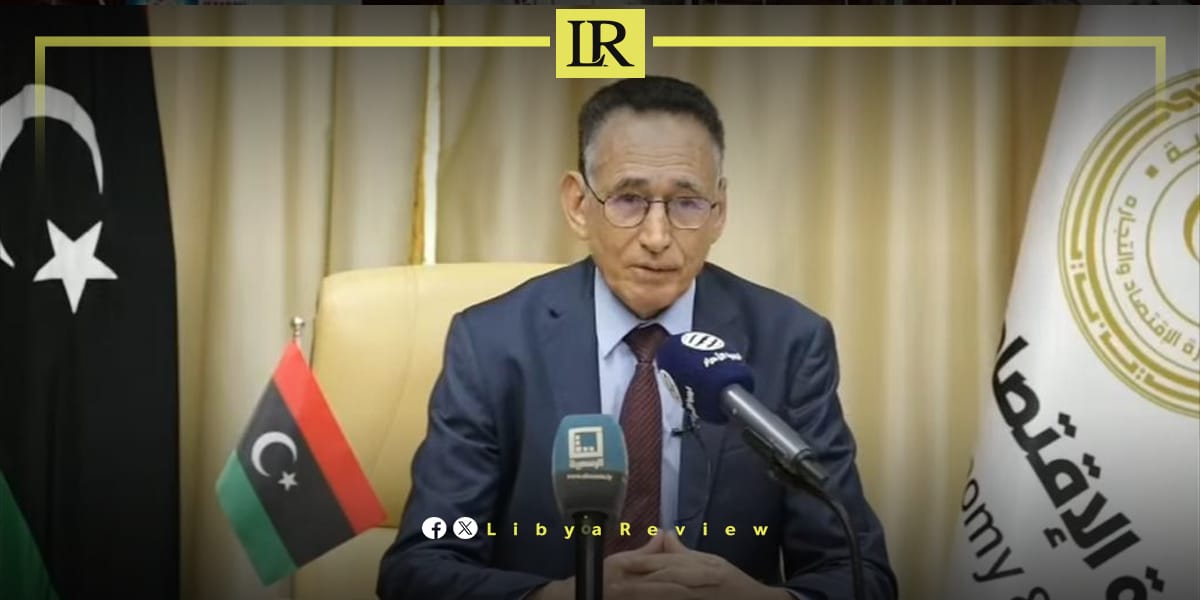
Libya’s Minister of Economy, Mohamed Al-Hwaij, highlighted the country’s vast potential for economic growth through strategic projects in key sectors such as energy, industry, and infrastructure.
Speaking at a press conference, he announced the launch of the “Solar Oasis” project, which aims to generate 20,000 megawatts of solar energy.
The minister detailed Libya’s cement production capacity, which stands at 21 million tonnes annually, with domestic consumption at only 10 million tonnes.
Restarting dormant factories, such as the Nalut plant with a capacity of 1.4 million tonnes, will enable Libya to export surplus cement, creating new revenue streams.
Al-Hwaij also discussed plans to establish 14 industrial zones, although these require essential services for full operational efficiency.
In agriculture, Libya produces 1.4 million tonnes of wheat annually and plans to increase production by 500,000 tonnes in the south, which will support 36 local mills and reduce import dependency.
The minister also highlighted plans to develop truck and tractor manufacturing in collaboration with international partners.
In the energy sector, Al-Hwaij stressed the need for a new oil refinery with a capacity of 200,000–400,000 barrels per day to meet domestic demand and discussed upgrading the urea plant to boost fertiliser production.
Efforts to enhance Libya’s ports, such as those in Benghazi, Tripoli, and Misrata, aim to transform the country into a logistics hub connecting Asia, Africa, and Europe, generating significant revenues.
Al-Hwaij also emphasised the importance of foreign investments, developing the tourism sector to attract 4.6 million visitors annually, and increasing steel production to 4 million tonnes per year as part of Libya’s economic transformation plan.

