
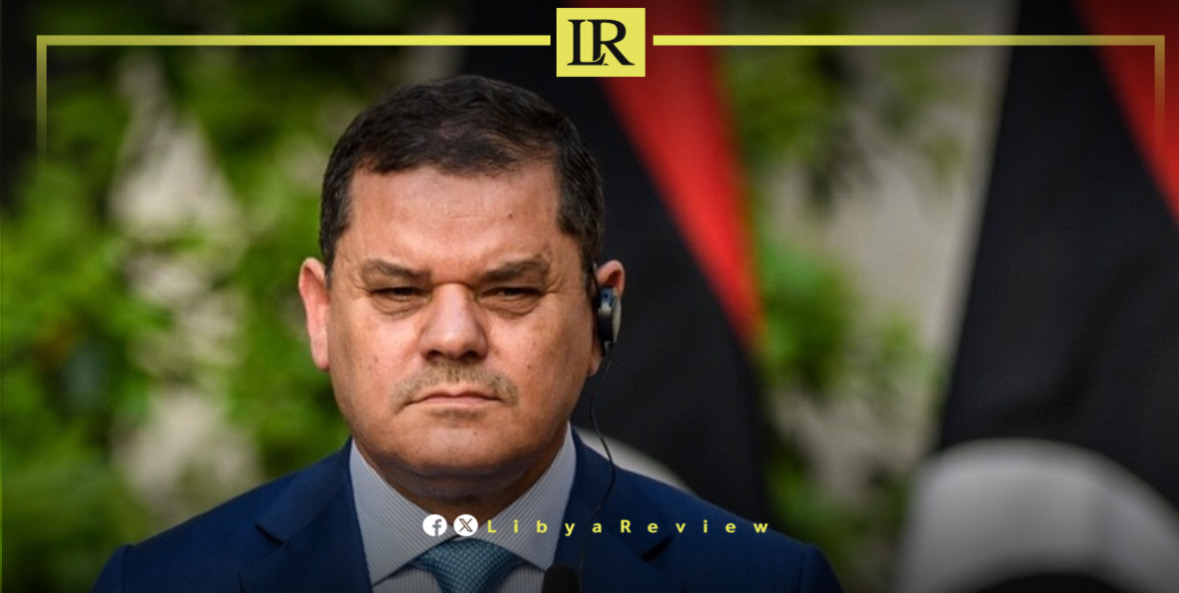
On Wednesday, Libya’s Prime Minister Abdul Hamid Dbaiba firmly rejected efforts by the Parliament to appoint a new government, warning against what he described as a return to “unproductive transitional phases.”
Speaking during a meeting with the First Deputy President of the High Council of State and several of its members at the Prime Minister’s Office, Dbaiba stated that such steps lack popular legitimacy and do not reflect the will of the Libyan people.
Dbaiba reiterated that the only path forward is to end the cycle of interim governments and move directly toward holding comprehensive and inclusive presidential and parliamentary elections. “There is no legitimacy to any attempt that prolongs the crisis,” he said, calling for a public referendum as a decisive mechanism to bypass political paralysis.
He criticised the leadership of the House of Representatives for deliberately stalling the electoral process, accusing them of obstructing the path to a unified and democratic Libya. “Our vision is to permanently end transitional stages and fulfill the demands of the people through the ballot box, not through imposed political deals,” Dbaiba said.
On the security front, the Prime Minister emphasized his government’s ongoing commitment to dismantling armed groups operating outside state authority. He stressed the importance of consolidating formal military and police institutions as essential pillars for national stability and law enforcement.
Dbaiba also urged enhanced coordination between the government and the High Council of State to overcome artificial political obstacles and advance institutional reform. “It’s time to unite behind a national agenda focused on rebuilding state institutions, restoring security, and enabling elections,” he added.
This statement comes as the Libyan parliament accelerates its push to name a replacement government. However, Dbaiba remains defiant, underscoring that any such move, in his view, would only deepen division and derail the political process.

