
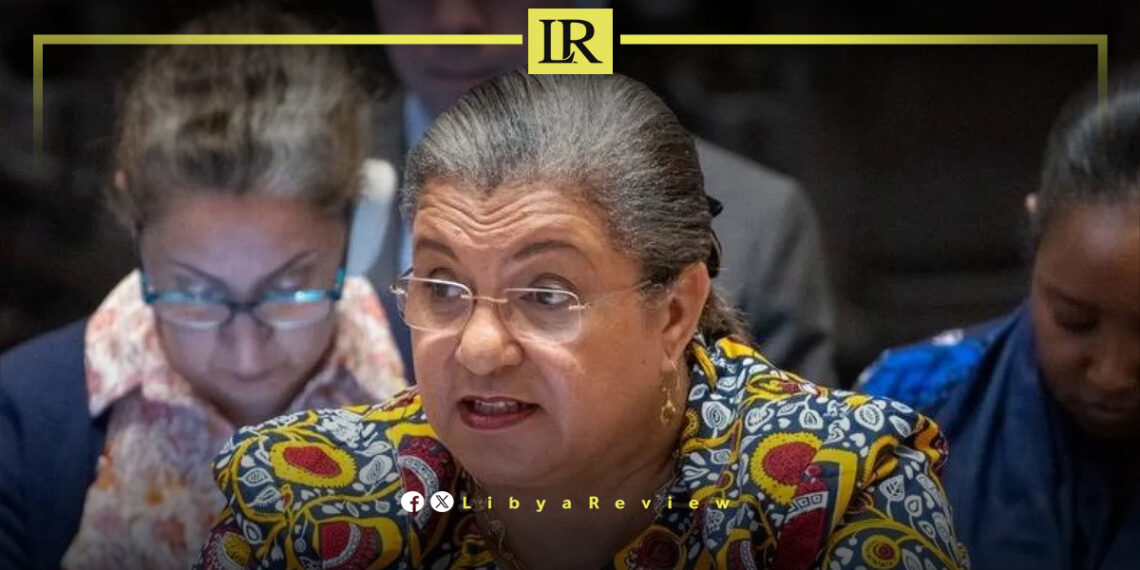
The United Nations Secretary-General’s Special Representative for Libya, Hanna Serwaa Tetteh, warned that hate speech is becoming a serious obstacle to national unity and peace efforts. Her statement, issued Wednesday on the International Day for Countering Hate Speech, called for immediate and coordinated efforts to confront divisive rhetoric across Libya.
Tetteh described hate speech as a direct threat to the country’s stability, particularly in the context of Libya’s fragile security and political polarization. “In such a sensitive environment, hate speech—especially when based on regional, tribal, or ethnic divisions—can do lasting damage,” she said. “It deepens mistrust, fuels conflict, and undermines the work toward national reconciliation.”
She stressed that fighting hate speech is not only the responsibility of governments but also of society as a whole. Institutions, media outlets, social leaders, civil society organizations, digital platforms, and individual citizens all have a role to play.
Tetteh called for replacing inflammatory rhetoric with a more constructive, inclusive, and respectful tone that encourages unity and forward-looking dialogue.
The UN Support Mission in Libya reaffirmed its commitment to working with all Libyans to foster national dialogue, support reconciliation, and promote responsible public messaging. She emphasized that inclusive communication must be part of any genuine effort to move the country toward peace and stability.
The UN diplomat also addressed the growing influence of digital technologies and artificial intelligence in shaping public opinion. While these tools can be used to support peacebuilding, Tetteh warned that they must not become channels for spreading hate or misinformation. “We must ensure these technologies are used to unite, not divide,” she said.
Tetteh concluded with a strong call to action: “We must stand against hate, choose respect in our differences, and build a future for Libya based on unity, justice, and lasting peace.”
Her statement comes at a time when online incitement and identity-driven rhetoric remain key challenges for Libya’s fragile political transition, threatening to derail reconciliation efforts and widen existing divisions.

