
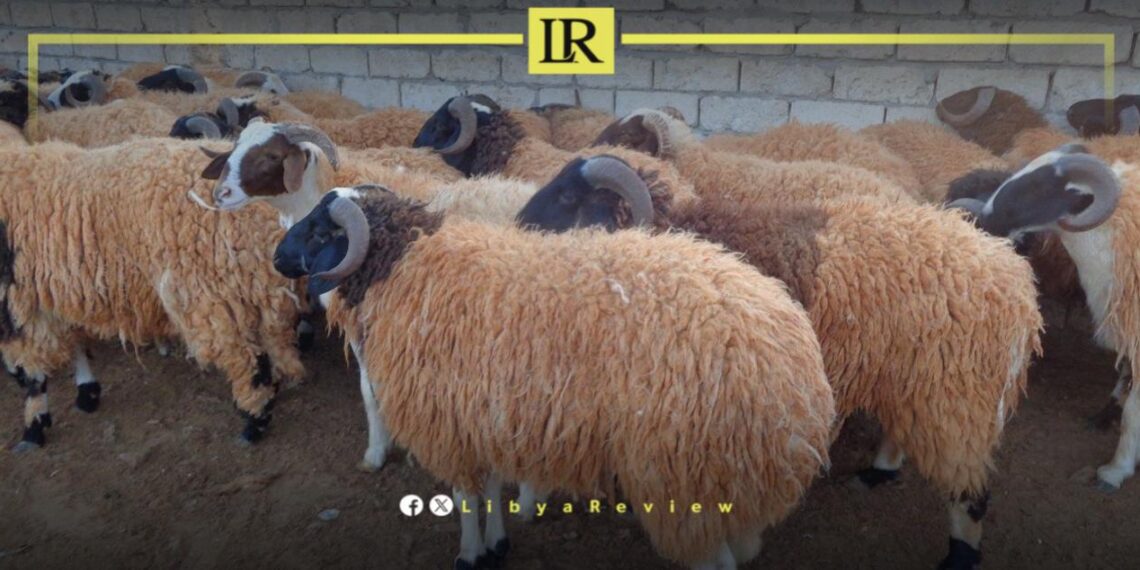
Growing fears are spreading among livestock breeders in eastern Libya following confirmed outbreaks of peste des petits ruminants (PPR), commonly known as sheep plague, according to veterinary experts and the National Centre for Animal Health. The disease is raising concerns over the country’s food security and the stability of rural incomes.
Dr Amjad Al-Awkali, a veterinarian with the Municipal Guard in Al-Abraq, told the Libyan News Agency (LANA) that PPR is classified as a highly contagious epidemic affecting sheep and goats. He stressed that Libya, ranked ninth in the Arab world for its sheep population, relies heavily on this livestock for national food security. However, he warned that the disease has been circulating for more than four years, placing herds at increasing risk.
Dr Mohamed Al-Aqoub, head of the National Centre for Animal Health, confirmed to LANA that laboratory testing of more than 400 random samples from herds in areas including Benghazi, Marj, Ajdabiya, Soluq and Qaminis showed an infection rate of 13 percent. He noted that mortality can reach up to 50 percent without treatment. Weak vaccination services and cross-border smuggling of livestock from infected African regions have worsened the crisis.
The centre has launched containment measures, including quarantine zones, intensified disinfection campaigns, vaccination drives, and tighter controls on livestock movement to limit the spread of the disease.
PPR is a viral disease closely related to human measles and cattle rinderpest. It spreads rapidly through respiratory droplets and contaminated feeding equipment, causing high fever, nasal discharge, mouth ulcers, coughing, diarrhoea and severe weight loss. Unvaccinated herds can face mortality rates of up to 80 percent.
Experts emphasise that prevention requires strict vaccination programmes, immediate isolation of suspected cases, improved veterinary services, and public awareness campaigns to safeguard rural livelihoods and Libya’s broader food security.

