
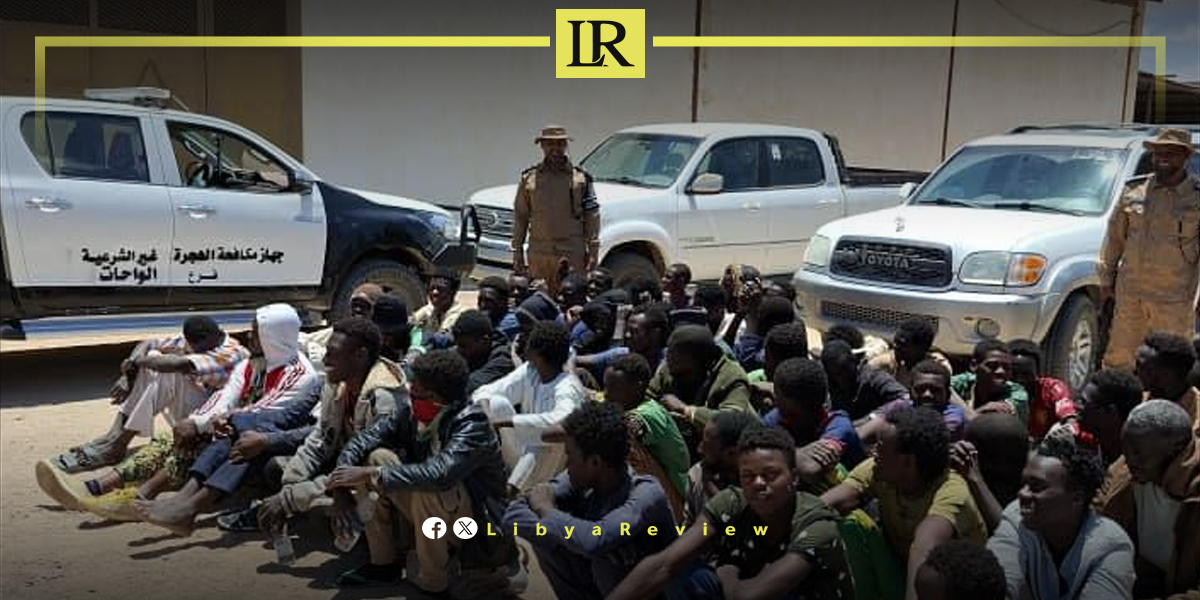
Libyan authorities have foiled a migrant smuggling operation deep in the southern desert, rescuing 52 migrants after six others reportedly died during the journey.
Patrols from the Anti-Illegal Migration Agency’s Wahat branch, working with the Petroleum Facilities Guard under the General Command and in coordination with the agency’s leadership, intercepted three four-wheel-drive vehicles used to transport migrants through dangerous desert routes.
According to the agency, security units first seized two vehicles, a Tundra and a Sequoia, carrying 52 undocumented migrants. The group included 49 Sudanese nationals and three Chadian nationals. They were taken to the branch headquarters, where legal reports were opened as part of the investigation.
Initial inquiries found that the migrants had travelled from the Kouri Bougoudi mining area inside Chad, moving through remote desert tracks commonly used by smuggling and illegal migration networks. These routes lack basic safety conditions, supplies, and emergency services.
The migrants told investigators that the journey had involved severe humanitarian conditions, including extreme thirst, lack of supplies, and becoming lost in the desert. They said six people who had been travelling with them died during the trip, and that their bodies were left in the desert because of the harsh terrain and the difficulty of movement.
Investigations with the two vehicle drivers, both Sudanese nationals, also revealed that a third vehicle had broken down during the journey. Security patrols later located and seized it.
The Anti-Illegal Migration Agency said the Public Prosecution had been notified to take the required legal measures. It added that coordination was underway with the Libyan Red Crescent to locate the bodies and recover them.
The agency said the site is around 300 kilometres southwest of the Wahat area.
It renewed its warning against illegal migration and falling into the hands of smuggling networks, stressing that desert routes used in such operations pose a direct threat to migrants’ lives because of the harsh environment, the absence of rescue services, and the lack of food, water, and fuel supplies.
The incident highlights the deadly risks facing migrants who attempt to cross Libya’s southern desert, where remote terrain, criminal smuggling networks, and extreme weather conditions continue to endanger lives.

