
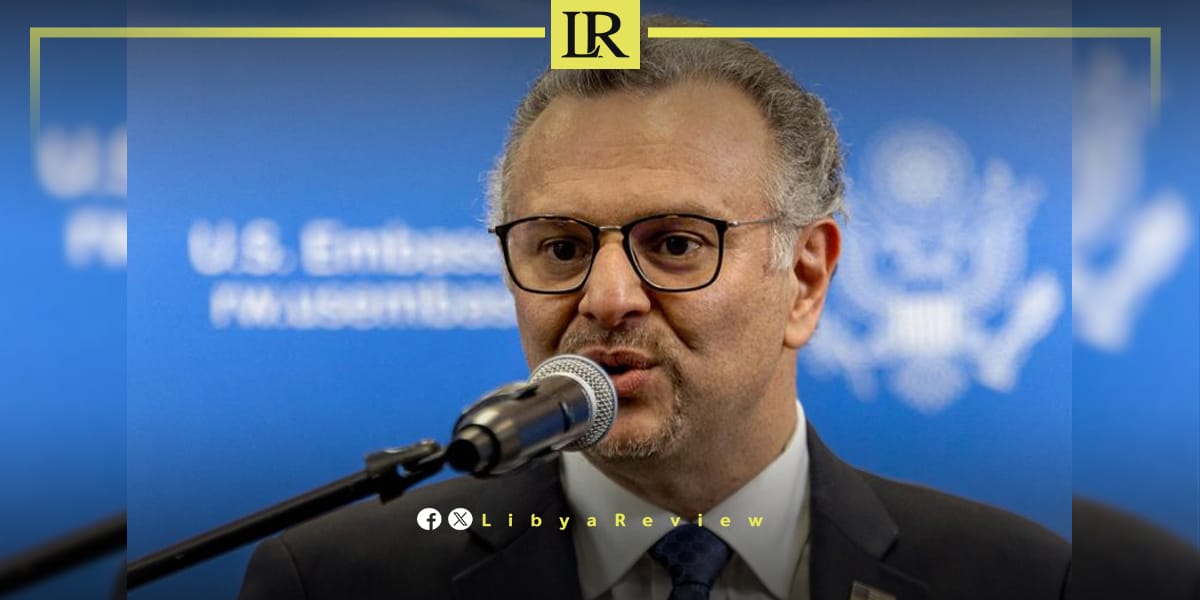
Massad Boulos, adviser to the U.S. President, has said that any lasting solution to Libya’s political crisis must be led by Libyans themselves, not imposed from outside.
His remarks came during a meeting with Hanna Serwaa Tetteh, Head of the United Nations Support Mission in Libya, as both sides discussed efforts to unify Libya’s divided authorities and institutions.
Boulos said the United States remains committed to supporting efforts aimed at ending Libya’s political and institutional division. He described the unification of state bodies as an essential step toward restoring stability and creating the conditions for a credible political process.
According to Boulos, Washington’s moves are being carried out in coordination with the roadmap prepared by the United Nations Support Mission in Libya. He said the U.S. role is intended to support, rather than replace, a Libyan-led process that allows the country’s people to decide their own political future.
He added that the United States believes any sustainable settlement in Libya must come from within the country, backed by effective international support. Such support, he said, should help create the right conditions for political progress and encourage agreement among Libya’s rival parties.
For her part, Hanna Serwaa Tetteh welcomed the U.S. position, saying stronger coordination between the United States and the United Nations could help push international efforts toward more serious steps to end Libya’s long-running crisis.
She said the need to unify Libya’s institutions and rebuild trust among political actors remains urgent, especially as the country continues to face the effects of years of division.
The meeting comes amid renewed international activity on Libya, with several diplomatic tracks focusing on the need for a political settlement. International actors have repeatedly stated that a political solution remains the only viable path to lasting stability.
Libya has remained divided between competing political and institutional authorities, while efforts to reach a comprehensive settlement have faced repeated delays. The latest U.S.-UN coordination reflects growing pressure to revive the political process and support Libyan parties in moving toward unified national institutions.

