
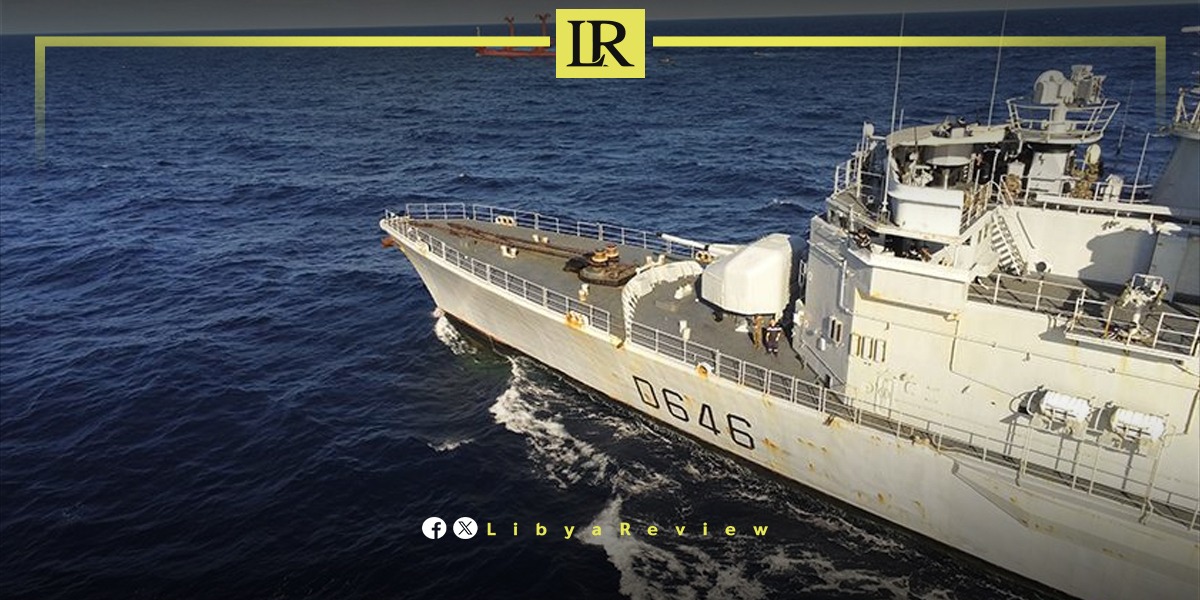
The European maritime mission “IRINI” could continue operating off the Libyan coast without renewed United Nations authorization after disagreements within the Security Council prevented the extension of its legal mandate.
According to reports published by the Greek newspaper Kathimerini, Greece and France, which were involved in drafting UN Security Council Resolution 2292 in 2016, did not submit a request to renew the mandate before its annual expiration date.
The resolution provides the legal basis allowing the European mission to inspect vessels suspected of violating the international arms embargo on Libya.
If the mandate expires after May 25 without renewal, the operation may continue without the same UN-backed authority to carry out maritime inspections linked to arms trafficking and embargo enforcement.
The report indicated that internal discussions within the European Union contributed to the current situation. Some European officials are reportedly considering separating the mission from direct Security Council oversight as part of broader efforts to increase European strategic independence in managing security and defense operations.
The “IRINI” mission was launched by the European Union in 2020 to monitor implementation of the UN arms embargo on Libya. The operation also focuses on combating smuggling networks and monitoring illegal trafficking activities in the Mediterranean region.
According to the report, Libyan authorities proposed expanding the mission’s role to include tighter measures targeting oil and petroleum products. However, the proposal reportedly faced opposition from some Security Council members who viewed such measures as conflicting with their political or economic interests.
The uncertainty surrounding the mandate comes amid ongoing international concern over arms flows, organized smuggling networks, and instability connected to Libya’s prolonged political crisis.

