
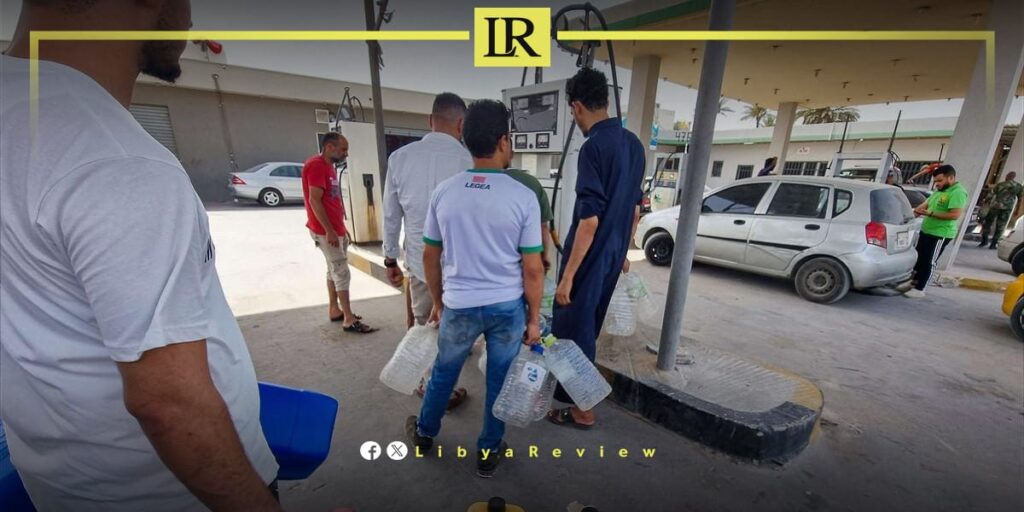
Libya’s worsening fuel crisis in the western region turned deadly after one man was killed and another seriously injured during a dispute at a petrol station in the city of Zawiya, highlighting growing public frustration over persistent shortages of petrol and diesel.
The incident took place on Sunday evening at the Al-Suwaisi fuel station near the entrance to Zawiya, where motorists had gathered in long queues waiting to refuel. According to local reports and eyewitness accounts, an argument between several citizens escalated into gunfire, leaving one young man dead and another critically wounded. The injured victim was transferred to hospital for treatment.
The shooting sparked widespread anger and sadness across the city, with activists and residents describing the incident as a reflection of mounting tensions caused by Libya’s recurring fuel shortages despite the country possessing Africa’s largest proven oil reserves.
Major congestion has continued across western Libyan cities, including Tripoli, Zawiya, Sorman, Sabratha, Ajilat, and Zuwara, where long lines of vehicles and trucks have stretched along the coastal highway. Several fuel stations have reportedly suspended operations amid shortages of petrol and diesel supplies.
Residents have also complained about rising black-market prices, with the cost of a single fuel container reaching nearly 40 Libyan dinars in some areas. Social media users circulated videos and images showing extensive queues and hours-long waiting times, while accusations of hoarding and fuel smuggling intensified.
The crisis has fuelled broader controversy over Libya’s fuel import bill after reports indicated that imported fuel shipments in April alone were valued at around $915 million, despite severe shortages continuing across several cities.
The National Oil Corporation said fuel supply and unloading operations at major depots were continuing normally. Latest figures released by the corporation showed petrol and gas tankers unloading at depots in Tripoli, Zawiya, and Benghazi.
Meanwhile, the Zawiya Fuel and Gas Monitoring Committee announced field inspections to oversee fuel distribution and combat illegal practices. The committee warned that strict legal measures would be taken against those involved in hoarding, smuggling, or deliberately creating shortages, including licence withdrawals and station closures.

