
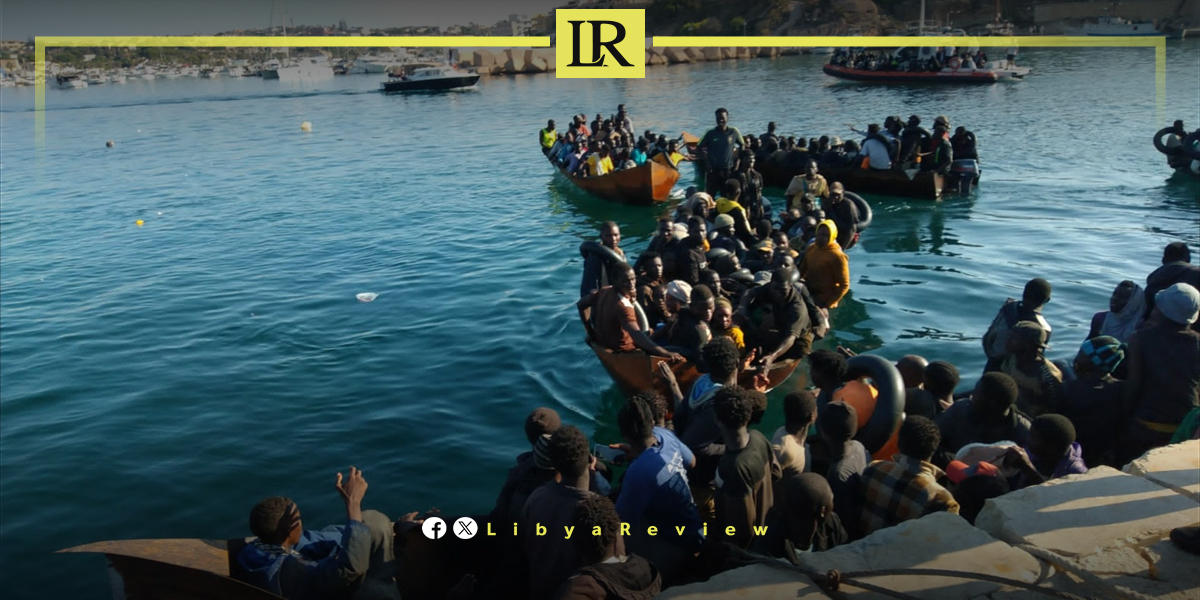
Libya has witnessed growing public debate in recent days over the issue of irregular migration, following reports that some migrants had received residency-related documentation through the United Nations High Commissioner for Refugees (UNHCR). The reports sparked widespread discussion and renewed concerns among many Libyans about what they perceive as efforts that could encourage the long-term settlement of migrants inside the country.
The controversy has fueled calls on social media for demonstrations outside the UNHCR office in Tripoli, with activists demanding the suspension of the agency’s activities and rejecting any initiatives that could lead to the permanent integration or resettlement of migrants in Libya.
For many Libyans, migration is no longer viewed solely as a transit issue linked to journeys toward Europe. Instead, growing numbers of migrants, the expansion of informal communities, and the emergence of markets and residential areas operating outside state oversight have intensified concerns about the potential social, economic, and security implications of irregular migration.
At the same time, the escalating public reaction has raised concerns among human rights advocates about the risk of increased hostility toward migrants and foreign residents. Libya’s Ministry of Foreign Affairs and International Cooperation of the outgoing Government of National Unity urged citizens to verify information before sharing it and warned against rumors and inflammatory rhetoric that could undermine national interests.
The ministry also reaffirmed Libya’s rejection of any plans aimed at permanently resettling irregular migrants in the country while stressing the importance of respecting diplomatic and international institutions and ensuring the safety of their personnel.
Ahmed Hamza, rapporteur of the National Institution for Human Rights, expressed concern over the growing spread of hate speech and incitement against migrants and foreign residents on social media platforms. He warned that such rhetoric could contribute to social tensions and expose vulnerable communities to threats affecting their safety and well-being.
According to figures cited by the Ministry of Interior, Libya is currently home to approximately 2.5 million foreign nationals. Officials estimate that nearly 80 percent entered the country through irregular channels and remain outside formal residency, tax, and public service registration systems.
The migration issue continues to represent one of Libya’s most sensitive challenges, intersecting with security, economic, humanitarian, and political concerns, while remaining at the center of public debate and policymaking discussions.

