
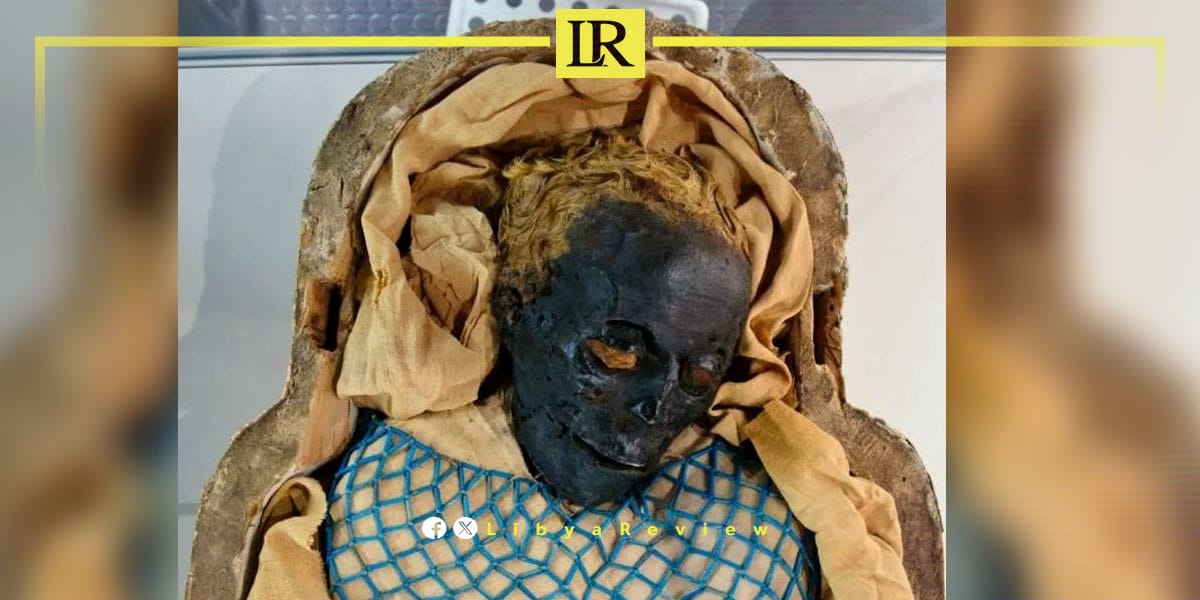
One of Africa’s oldest known natural mummies has returned to Libya after years of absence and an extensive restoration programme, marking a significant milestone in the country’s efforts to preserve its archaeological heritage.
The Government of National Unity announced that the Department of Antiquities had officially received the Takarkori Mummy following the completion of conservation work. Officials said the process was carried out under the direct supervision of Prime Minister Abdulhamid Dbeibah as part of an ongoing programme aimed at protecting Libya’s historical treasures and safeguarding evidence of the country’s rich human history.
The Takarkori Mummy occupies a unique place in archaeological research. Scientists estimate that the woman was around 35 years old when she died nearly 7,000 years ago, making her one of the oldest natural mummies discovered in Africa and one of the earliest known examples of a human body preserved through natural environmental conditions.
The mummy was discovered in 2004 in the Takarkori Valley, located in the far south of Libya’s Acacus Mountains. The remote desert region is renowned for its caves and prehistoric rock art, which document the lives of some of the earliest communities to inhabit the Sahara.
Researchers believe that exceptional environmental conditions, including extreme aridity and the characteristics of the surrounding soil, naturally dehydrated the body and preserved it in remarkable condition for millennia.
Beyond its archaeological significance, the mummy provides valuable scientific evidence for studying climate change, health, diet and lifestyles in prehistoric Sahara communities. Experts say the remains offer insights into a period when large parts of the Sahara were significantly wetter and more suitable for human settlement than they are today.
Following the opening and preparation of the National Museum in Tripoli last year, the Takarkori Mummy is scheduled to be displayed in a dedicated exhibition hall for an initial three-month period. Visitors will be able to view information panels explaining its discovery, original environment and the scientific techniques used during restoration before the mummy is transferred to its permanent home in the museum’s mummy gallery.

