
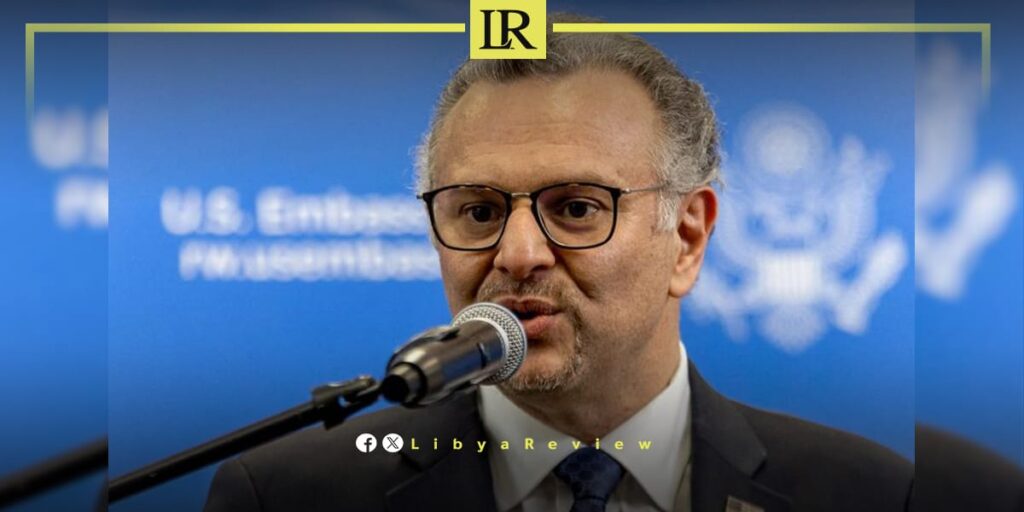
The United States is working to broker a power-sharing agreement between Libya’s rival eastern and western administrations as part of a broader effort to reunify the country and revive its political process, according to Massad Boulos, adviser to US President Donald Trump on Middle East and African affairs.
In an interview with the Financial Times, Boulos said Washington is seeking to bring Libya’s divided institutions under a single authority while simultaneously encouraging greater investment by American energy companies in the country’s oil sector.
“Our plan is to have one unified government and unify all institutions,” Boulos said.
The initiative comes after years of stalled United Nations-backed efforts to organise national elections capable of ending Libya’s political division. Previous attempts have repeatedly faced resistance from political actors and armed groups concerned about losing influence and access to state resources, including oil revenues.
Libya possesses Africa’s largest proven oil reserves, yet production has remained below potential due to years of instability, sanctions and disruptions following the 2011 uprising that overthrew Muammar Gaddafi.
Boulos said Washington is encouraging major US energy firms to expand operations in Libya, noting that ConocoPhillips and Chevron signed agreements in the country during 2026. He suggested Libyan oil production could eventually double to three million barrels per day before the end of the decade.
According to the Financial Times, the proposed arrangement could involve Lieutenant General Saddam Haftar, deputy commander of the Libyan National Army, leading an executive presidential council, while Prime Minister Abdulhamid Dbeibah would remain in office. The proposal is reportedly being considered as a temporary arrangement ahead of parliamentary and presidential elections.
However, diplomats and analysts expressed doubts about the plan’s viability. Critics point to deep mistrust between Libya’s rival camps and question whether key figures would be willing to share power.
Analysts from the International Crisis Group and Chatham House argued that previous political behaviour by both sides raises concerns over the prospects for genuine reconciliation and long-term institutional reform.
Boulos said recent progress, including agreements on development funding, a unified national budget and military cooperation initiatives supported by US Africa Command, could provide a foundation for future unification efforts. Nevertheless, significant political and security challenges remain before any comprehensive settlement can be achieved.

