
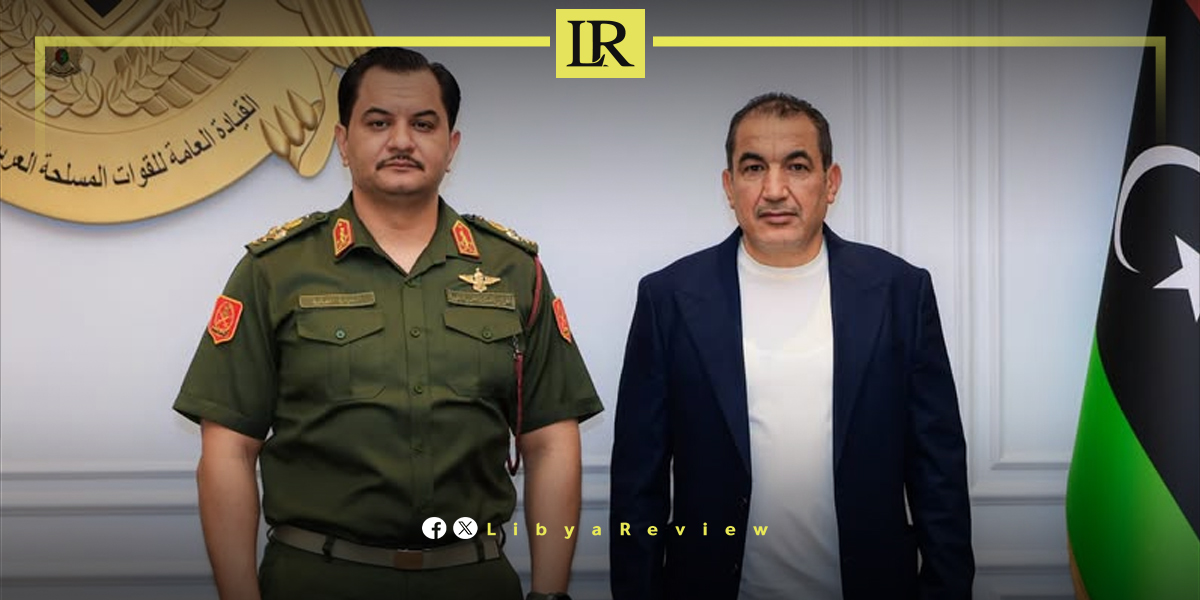
Deputy Commander-in-Chief of the Libyan Armed Forces, Lieutenant General Saddam Haftar, met with Libya’s Interior Minister, Major General Essam Abu Zriba, to review the latest measures to regulate irregular migration and strengthen security coordination across Libya.
The meeting focused on the implementation of ongoing plans to address illegal migration, one of the country’s most pressing security and humanitarian challenges.
Discussions covered the progress made by the relevant authorities and explored ways to improve coordination between the Armed Forces and security agencies to enhance stability and reinforce state institutions.
For his part, Saddam Haftar emphasized the importance of maintaining a comprehensive and organized approach to managing migration, stressing the need for continued cooperation among all responsible agencies.
He highlighted that effective coordination is essential to addressing security concerns linked to irregular migration while preserving stability in different regions of the country.
The participants also reviewed efforts being undertaken in coordination with the House of Representatives regarding the proposed salary law for Interior Ministry personnel. The initiative is intended to improve conditions for security officers and acknowledge the role they play in maintaining public safety and enforcing the law.
In addition to migration-related issues, the meeting examined many operational and administrative challenges facing security directorates across Libya. Officials discussed obstacles affecting daily operations, resource allocation, and institutional performance, as well as possible solutions to improve efficiency and strengthen the capacity of local security agencies.
During the discussions, Saddam Haftar directed the relevant authorities to address the challenges facing security directorates and to take the necessary measures to ensure more effective performance. He stressed that overcoming these obstacles is essential for enhancing security services and improving the ability of institutions to respond to emerging challenges.

