
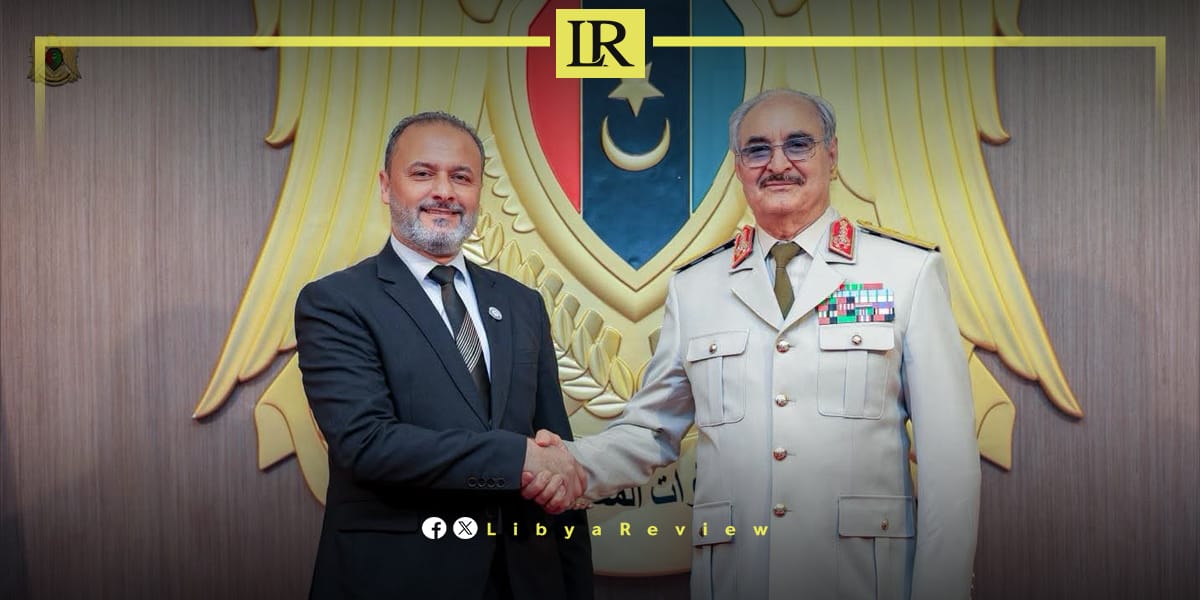
Field Marshal Khalifa Haftar, Commander-in-Chief of the Libyan National Army, has reaffirmed his support for Libya’s educational institutions during a meeting with Benghazi University President Ezzeddin Al-Dersi in Benghazi.
According to a statement from the General Command’s Media Office, the meeting focused on the progress of academic and educational activities across the university’s faculties, as well as efforts to develop curricula and scientific programmes aimed at improving educational outcomes and enhancing the academic environment for students and teaching staff.
Al-Dersi briefed Haftar on the university’s current academic programmes and discussed plans to modernise teaching methods and strengthen the institution’s role in preparing qualified national professionals capable of contributing to Libya’s future development.
During the meeting, Haftar praised Benghazi University’s long-standing academic and historical role, describing the institution as one of Libya’s leading centres of higher education that has produced generations of skilled professionals and national figures.
He stressed that education remains the cornerstone of nation-building and reiterated his commitment to providing continuous and unlimited support to educational institutions across the country.
Haftar said investing in education is essential to preparing future generations and creating the human capital needed to support Libya’s reconstruction and long-term stability.
The meeting comes as authorities in eastern Libya continue to emphasise the importance of strengthening educational institutions alongside broader development and reconstruction programmes being implemented in several sectors, including infrastructure, health and public services.
Benghazi University is one of Libya’s oldest and most prominent higher education institutions and plays a central role in training professionals in medicine, engineering, science and other disciplines vital to the country’s development.
The discussions highlighted the growing focus on educational reform and the importance of improving academic standards as Libya seeks to rebuild state institutions and invest in its future generations.

