
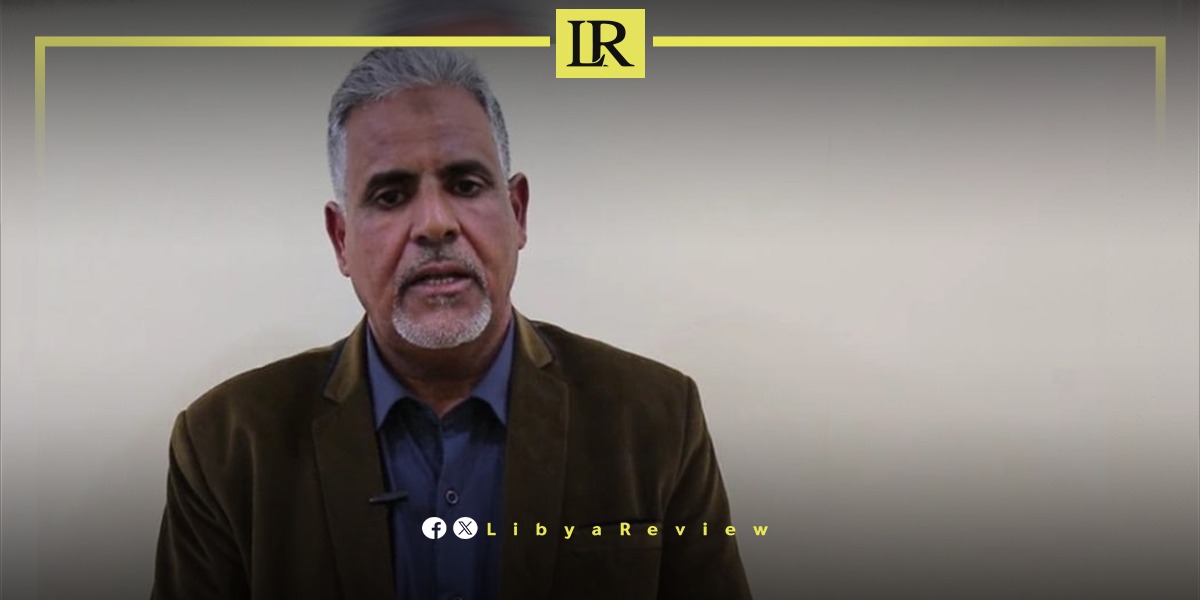
Member of Libya’s House of Representatives Jibril Waheeda said that unifying the country’s military and security institutions is the essential first step toward ending political division and paving the way for national elections, arguing that Libya’s crisis is fundamentally a security issue rather than a political one.
In press statements, Waheeda said that the House of Representatives has consistently supported initiatives aimed at unifying state institutions and ending the country’s institutional split.
He stressed that the immediate priority should be bringing sovereign, military, and security institutions under a unified national framework, adding that the Libyan National Army also supports this objective.
Waheeda argued that the main obstacle to previous political initiatives remains the presence of armed groups in western Libya, particularly in Tripoli and its surrounding areas. According to him, these groups have prevented earlier agreements from being implemented by seeking to preserve their influence over state institutions.
He also claimed that some of these actors continue to receive foreign backing.
The lawmaker said Libya’s divisions do not stem from deep social or political disagreements among Libyans but rather from foreign intervention and the emergence of competing armed factions following the events of 2011.
He warned that maintaining the current situation could lead to renewed conflict and further weaken state institutions.
Waheeda said the latest political initiative differs from previous efforts because it places security issues at the center of the process instead of focusing exclusively on political dialogue.
He argued that earlier initiatives, including the Skhirat Agreement and subsequent dialogue rounds, failed because they did not resolve the security file before attempting political settlements.
He also expressed support for the US initiative led by Special Envoy Massad Boulos, describing it as a serious opportunity to move Libya toward institutional unification and elections. While noting that the House of Representatives has not formally adopted the proposal, he said most lawmakers support its overall direction.
Waheeda added that the United States has strategic and economic interests in a stable and unified Libya and could play an important role in encouraging progress.
He concluded that the remaining challenge is establishing a unified executive authority while ensuring that military, security, and sovereign institutions are unified and that the state becomes the sole holder of weapons before credible presidential and parliamentary elections can take place.

