
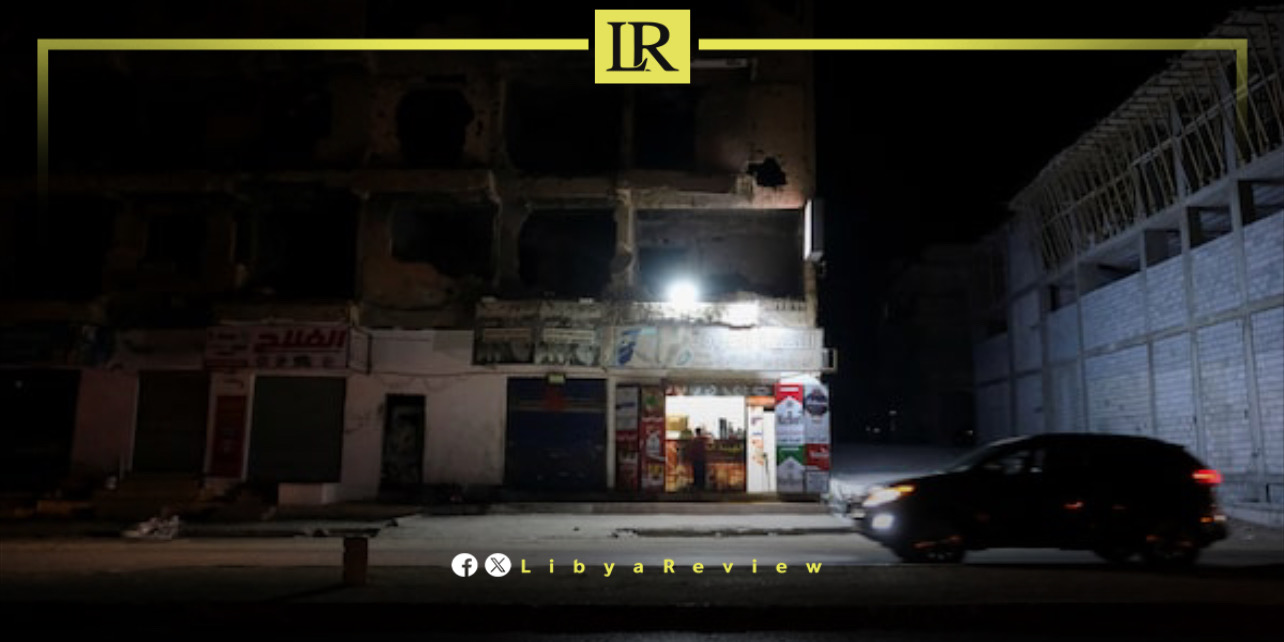
Egypt has begun supplying emergency electricity to Libya through the two countries’ cross-border power interconnection, providing urgent support to help restore Libya’s national electricity grid after a widespread blackout left much of the country without power.
According to an informed Egyptian source, the emergency supply was activated following intensive consultations between Libya’s Minister of Electricity and Renewable Energy, Awad Al-Badri, and Egyptian officials. The agreement allows Libya to use the existing electricity interconnection to provide the power needed to restart key generating stations and gradually restore the national grid.
The nationwide blackout occurred on Friday evening after a sudden failure on the 400-kilovolt transmission line connecting the Misrata and Al Khums power stations. The disruption triggered a chain reaction that forced several major generating units offline, resulting in the loss of more than 1,350 megawatts of generating capacity and causing electricity outages across most of Libya.
Libya’s Ministry of Electricity and Renewable Energy said the transmission line failure caused a reverse flow of electricity within the network, leading to the sequential shutdown of major power plants and the collapse of the national grid. Ministry spokesman Rabie Khalifa said technical teams immediately launched emergency operations to restore the system.
The Egyptian source noted that the electricity interconnection between the two countries has been in place for years and is designed to enable power exchanges during emergencies or periods of high demand. The project forms part of broader regional efforts to strengthen energy integration, improve grid reliability, and enhance electricity security across neighboring countries.
Egypt has significantly expanded its electricity generation capacity in recent years through investments in conventional power stations and renewable energy projects. The resulting surplus has enabled Cairo to strengthen electricity interconnection projects with neighboring countries, including Libya and Sudan, while advancing larger regional initiatives with Saudi Arabia, Greece, and Cyprus.
The power outage comes as Libya faces a severe heatwave, with temperatures exceeding 42°C in several regions. The extreme weather has driven electricity demand sharply higher, placing additional strain on an electricity system that has long struggled with aging infrastructure, maintenance challenges, and growing seasonal demand.

