
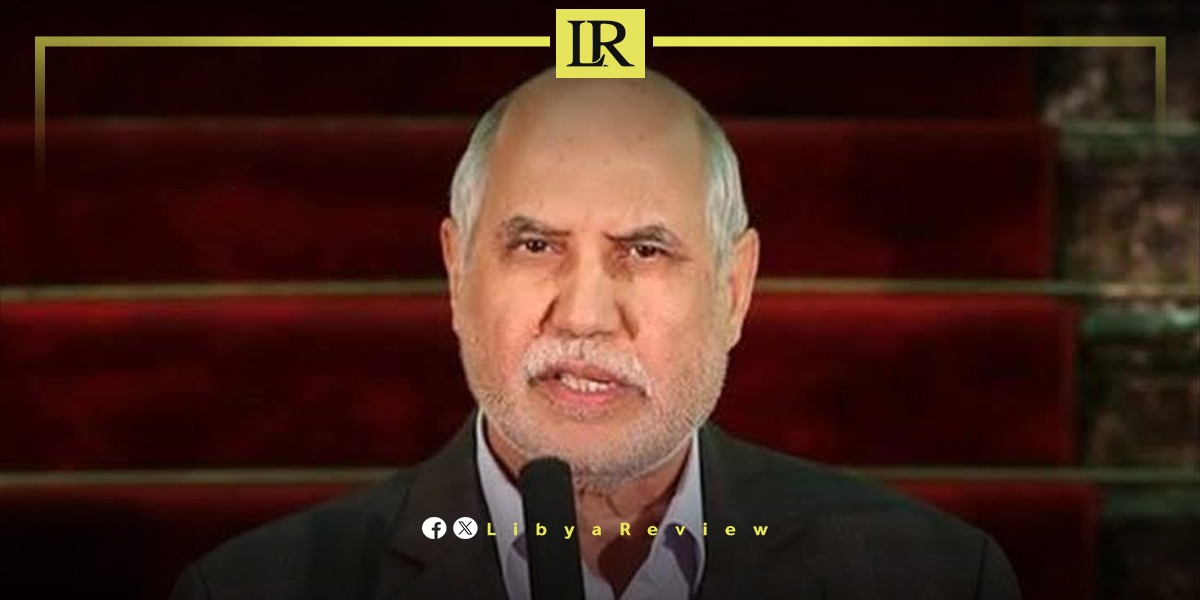
Mohamed Maazeb, a member of the High Council of State (HCS), has expressed skepticism about resolving the government formation deadlock by removing Mohamed Tekala from his position as the Council’s president. He noted that replacing Tekala with another figure does not necessarily lead to a swift consensus between the House of Representatives and the High Council of State.
In statements to Asharq Al-Awsat newspaper, Maazeb highlighted that a significant bloc within the Council, himself included, is not steadfast in their support for the interim Prime Minister Abdel-Hamid Dbaiba or Tekala. Instead, they are focused on ending the transitional phase by moving towards presidential elections based on constitutional foundations.
Maazeb pointed out that a faction of 61 out of 140 members of the Council has called for a new roadmap, which includes changing the current government and holding legislative elections immediately. He added that those advocating for this new roadmap are insisting on rejecting the presidential candidacy conditions outlined in the election law passed by the parliament.
On the other side, Maazeb mentioned that there is another group consisting of members of the House of Representatives and a closely aligned faction within the High Council of State. This group believes that the electoral laws are not subject to amendment.
Libya has been in chaos since a NATO-backed uprising toppled longtime leader Muammar Gaddafi in 2011. The county has for years been split between rival administrations.
Libya’s economy, heavily reliant on oil, has suffered due to the ongoing conflict. The instability has led to fluctuations in oil production and prices, impacting the global oil market and Libya’s economy.
The conflict has led to a significant humanitarian crisis in Libya, with thousands of people killed, and many more displaced. Migrants and refugees using Libya as a transit point to Europe have also faced dire conditions.
The planned elections for December 2021 were delayed due to disagreements over election laws and the eligibility of certain candidates. This delay has raised concerns about the feasibility of a peaceful political transition.
Despite the ceasefire, security remains a significant concern with sporadic fighting and the presence of mercenaries and foreign fighters. The unification of the military and the removal of foreign forces are crucial challenges.

