
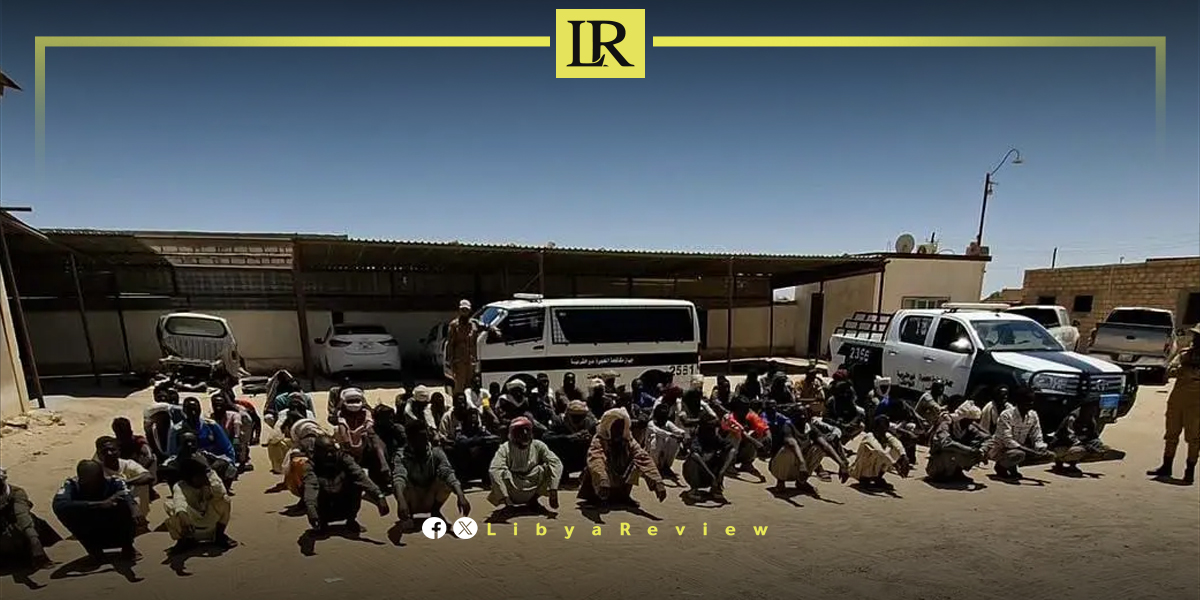
Libyan authorities have intercepted 74 irregular migrants during an operation targeting illegal border crossings in the country’s southern desert, as security forces continue efforts to secure Libya’s border with Chad and disrupt migrant smuggling networks operating across the Sahara.
The Anti-Illegal Migration Agency’s Al-Wahat branch announced that the operation was carried out in coordination with military and security units deployed in the region. According to the agency, the migrants were intercepted deep in the desert south of Al-Wahat while traveling in two vehicles that had entered Libya from the direction of the Chadian border.
Officials said the group consisted of 44 Chadian nationals and 30 Sudanese nationals, who entered Libya after crossing through the Kouri Mine area inside Chadian territory before attempting to travel further into the country along desert smuggling routes.
The agency confirmed that all 74 migrants were transferred to the Al-Wahat Migrant Holding Center, where legal procedures are being completed ahead of their deportation to their countries of origin in accordance with Libyan laws governing illegal migration.
Authorities said the operation forms part of broader efforts to strengthen security along Libya’s southern frontier, tighten control over remote desert routes, and combat criminal networks involved in migrant smuggling and cross-border trafficking. Security and military agencies continue to coordinate patrols and surveillance operations across the region to prevent unauthorized crossings.
Southern Libya remains one of the main transit corridors used by migrants seeking to reach northern Libya and eventually cross the Mediterranean toward Europe. The country’s long desert borders with neighboring states make monitoring illegal crossings particularly challenging, providing opportunities for trafficking and smuggling networks to operate.
The Al-Wahat region is considered one of the key routes used by smugglers moving migrants across the Sahara. In response, Libyan authorities have intensified border security operations, increased patrols, and expanded cooperation between military and law enforcement agencies to curb irregular migration and dismantle organized smuggling networks.

