
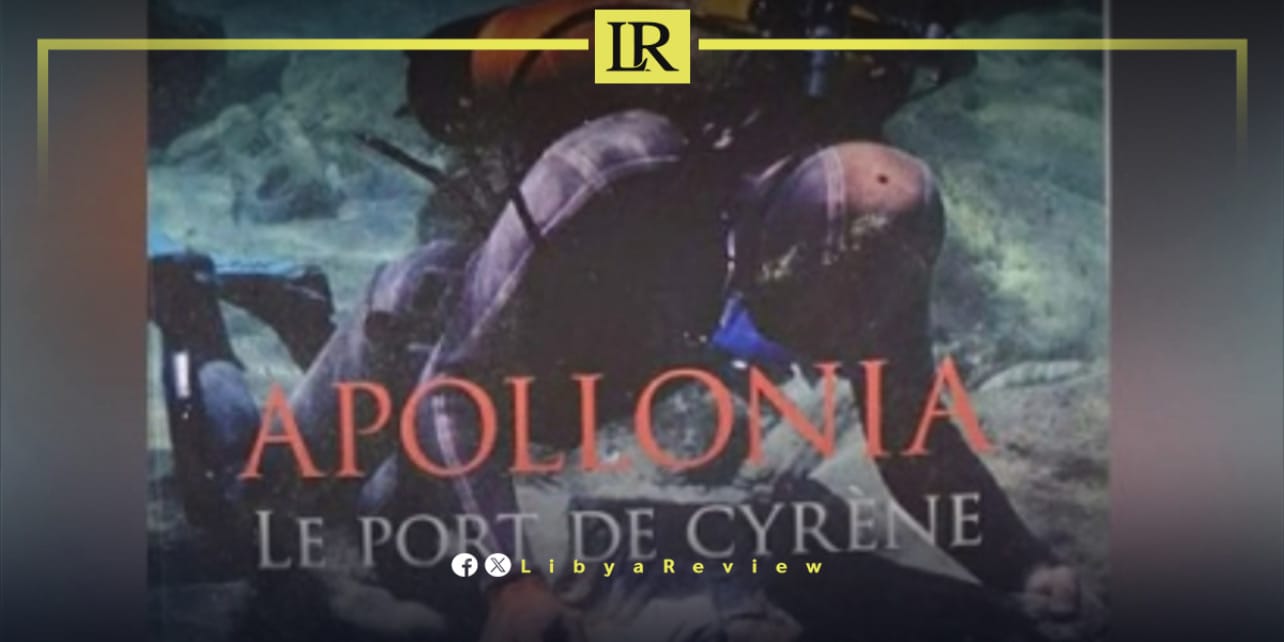
The French underwater archaeological mission has released a new book documenting the submerged antiquities of the eastern Libyan city of Susa, shedding fresh light on the historic port of Apollonia, once the maritime gateway to ancient Cyrene.
Titled “Apollonia: Port of the City of Cyrene,” the publication presents rare photographs and previously unpublished data that offer new insights into the archaeological and historical significance of the site. The work was prepared under the supervision of a French archaeologist and with the participation of a distinguished group of researchers specializing in maritime and classical archaeology.
According to the mission, the book provides a detailed scientific record of the submerged remains around Susa, combining field surveys, underwater documentation, and historical analysis. The findings help reconstruct the development of Apollonia and its role as one of the most important Mediterranean ports linked to Cyrene during the Greek and Roman periods.
The publication also examines the factors behind the deterioration of the ancient harbor during the fifth and sixth centuries AD. Researchers point to a combination of natural and environmental causes, including seismic activity, coastal changes, and possible tsunamis that affected the Cyrenaica coastline during the Late Antique period.
Archaeologists involved in the project say the newly published material is expected to support future research and preservation efforts at the site, which remains one of Libya’s most important underwater cultural heritage locations.
The book is seen as a significant contribution to the documentation of Libya’s submerged antiquities and to the broader understanding of ancient Mediterranean maritime networks.

