
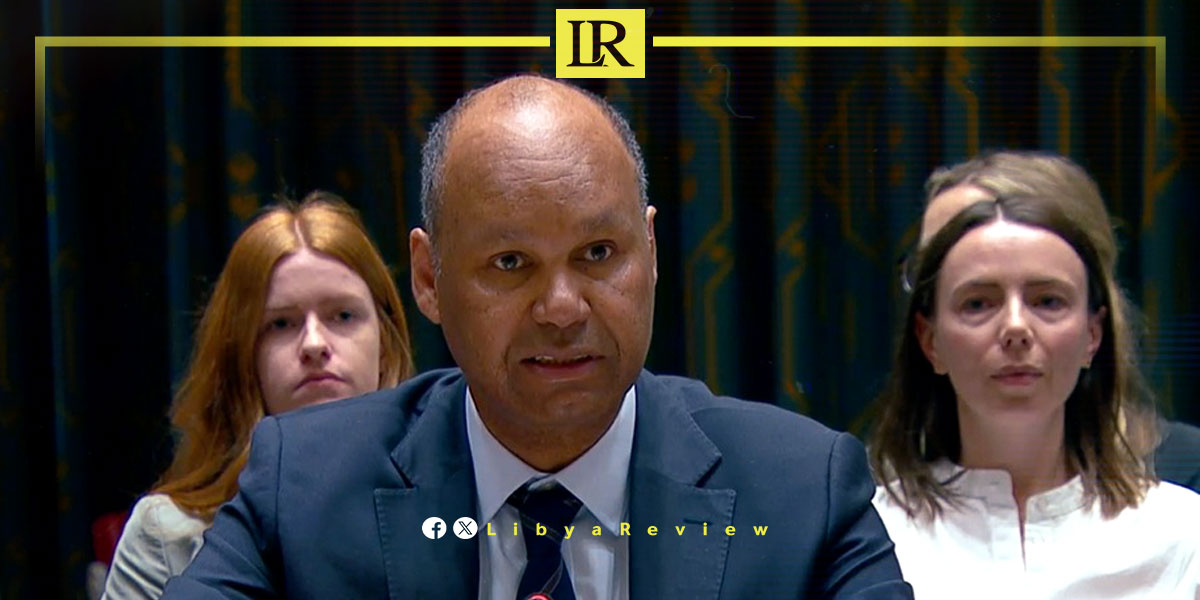
The United Nations Security Council has adopted a new resolution aimed at strengthening measures to combat illicit oil exports from Libya, reinforcing international efforts to safeguard the country’s economic resources.
Speaking at the Council session, UK Chargé d’Affaires James Kariuki welcomed the constructive engagement of member states during negotiations, emphasizing that the resolution reflects a shared commitment to peace, security, and the protection of Libya’s national wealth.
Kariuki said the resolution enhances mechanisms to counter oil smuggling, ensuring more coordinated international action against illegal exports that have long undermined Libya’s economy. He noted that the United Kingdom is open to further discussions on extending such measures in cooperation with regional organizations.
The resolution also introduces provisions related to the Libyan Investment Authority, allowing it to transfer the role of global custodian under the supervision of the sanctions committee. This step is designed to maintain the asset freeze while ensuring that Libya’s sovereign funds remain protected for the benefit of its citizens.
In addition, the resolution supports a comprehensive audit of the Libyan Investment Authority’s frozen assets, encouraging collaboration between member states and financial institutions to improve transparency and accountability.
The UK diplomat also welcomed recent progress on Libya’s unified national budget, describing it as a significant milestone toward improving financial governance. He highlighted the importance of implementing the agreement effectively to ensure responsible economic management and strengthen public institutions.
Kariuki further acknowledged the role of the United States in supporting dialogue that contributed to the budget agreement, noting that such cooperation is vital for stabilizing Libya’s economy.
He concluded by urging Libyan stakeholders to advance the UN-facilitated political process, stressing that sustained progress on political unity remains essential for long-term stability.

