
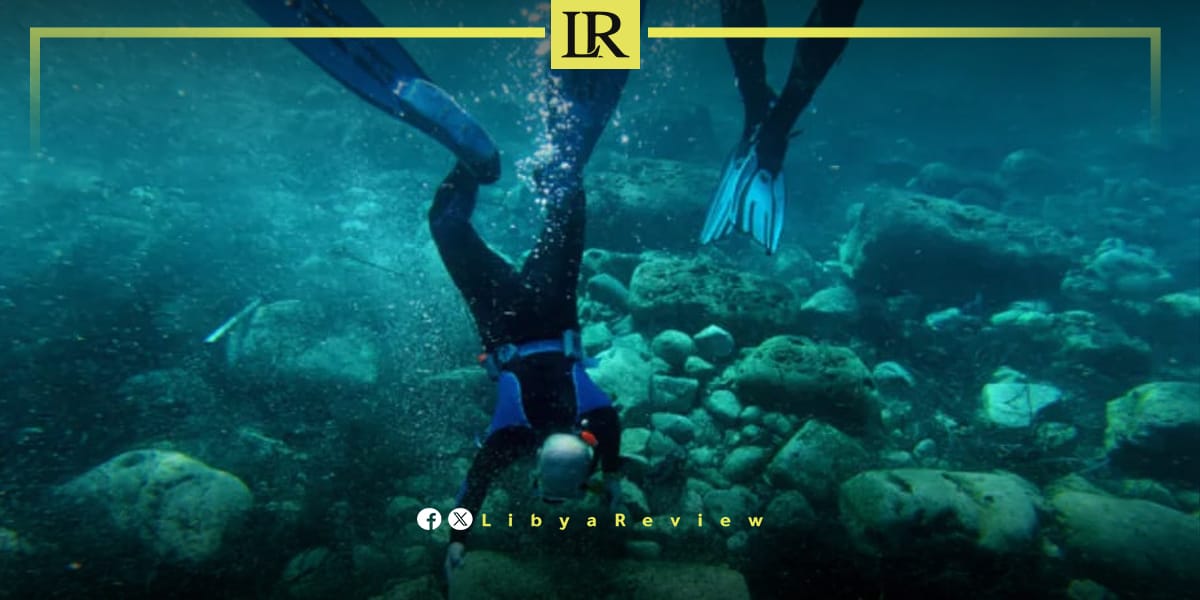
Archaeologists working in Libya have discovered what researchers describe as an ancient “ship graveyard” off the coast of Ptolemais, offering new insights into maritime trade and shipwrecks in the ancient Mediterranean.
The discovery was made by a Polish archaeological mission led by researchers from the University of Warsaw, who resumed their work in northeastern Libya after a 13-year pause caused by the country’s civil conflict.
According to the research team, the underwater site lies several kilometres east of the ancient harbour of Ptolemais and contains a dense concentration of ship fragments, amphorae, anchors and other artefacts scattered across more than 100 metres of seabed.
Experts believe the findings point to multiple shipwrecks that occurred over centuries as vessels attempted to approach the once-thriving port city.
Dr Piotr Jaworski, who leads the archaeological project, said the pattern of artefacts indicates that the site does not represent a single wreck. Instead, several ships likely sank in the same area, possibly after encountering dangerous coastal conditions while navigating toward the harbour.
The ancient city of Ptolemais was one of the largest Greek urban centres in the historic region of Cyrenaica. Founded during the rule of the Ptolemaic Dynasty between the fourth and third centuries BCE, it remained an important commercial hub until the Arab conquest in the seventh century.
During underwater exploration, divers also identified submerged architectural remains, including ancient columns and traces of coastal infrastructure believed to have been part of the harbour complex.
Among the most notable discoveries was a bronze Roman balance weight shaped like a female head, known as an aequipondium. The seabed also contained numerous amphorae, ceramic vessels historically used to transport goods such as wine and olive oil. Researchers say one amphora may still contain crystallised wine residues now undergoing laboratory analysis.
Archaeologists believe environmental changes, including rising Mediterranean sea levels and earthquakes, may have submerged parts of the ancient harbour over centuries.
The findings highlight Libya’s historical role as a key maritime centre in the Mediterranean world and suggest that much of the ancient city remains unexplored, both underwater and on land.

