
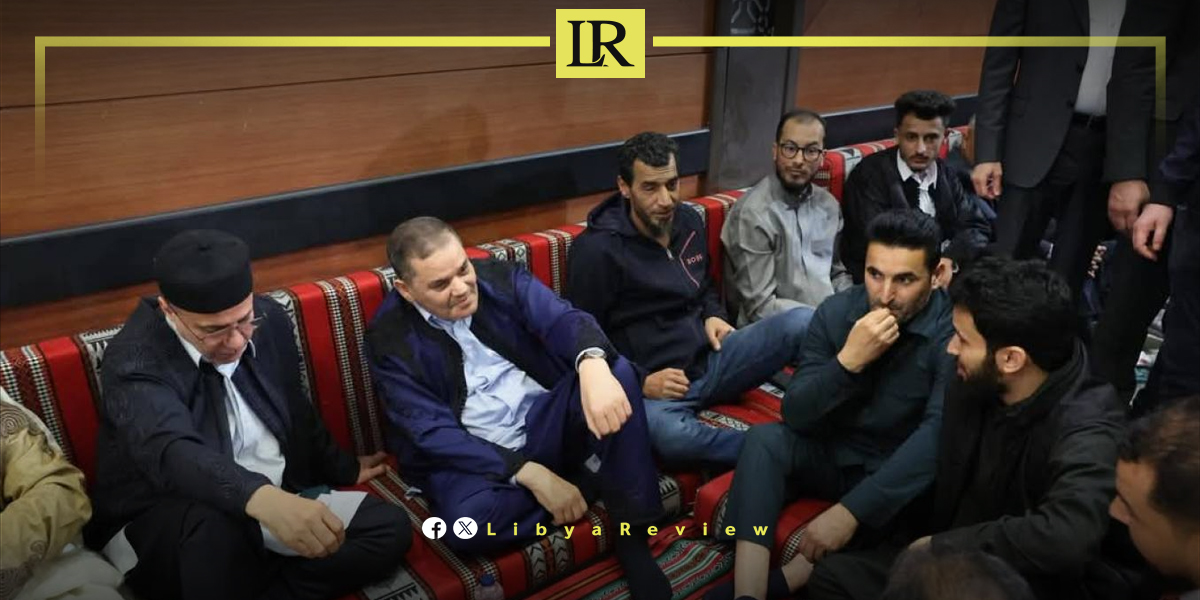
Libya’s political process is facing renewed uncertainty following a series of meetings between Abdel-Hamid Dbaiba and several armed factions in western Libya, developments that have raised fresh questions about the future of elections and the broader transition toward political stability.
The meetings took place amid tensions between certain armed groups and Interior Minister Imad Trabelsi, reflecting the fragile security balance in the capital and surrounding areas. Libya continues to struggle with the widespread presence of armed factions. According to United Nations estimates, more than 29 million weapons are circulating outside official state control, while roughly 300 armed groups operate across different parts of the country.
In May 2025, Dbaiba declared that his government was pursuing a project aimed at building a “Libya free of militias and corruption.” At the time, he called on Libyans to support the government’s efforts to strengthen state authority and restore the rule of law, saying the country could no longer tolerate the unchecked power of armed groups operating outside official institutions.
However, recent developments have drawn attention after Dbaiba was seen meeting several militia leaders in Tajoura and the western coastal region. Observers noted that the meetings came shortly after tensions emerged between some armed factions and the Interior Ministry, as well as around the time the prime minister introduced changes to his cabinet.
Political analysts say the meetings highlight the complex realities of Libya’s fragmented security landscape. Some observers believe Dbaiba is seeking to consolidate alliances with influential armed groups in western Libya in order to stabilize his position and maintain control in Tripoli. Others suggest that the government may be attempting to gradually incorporate these factions into official state structures through dialogue rather than confrontation.
The situation also reflects broader political competition between western authorities and the eastern-based leadership aligned with Khalifa Haftar. Analysts say that consolidating support among western factions could strengthen Dbaiba’s position ahead of possible negotiations over Libya’s political future.
Despite ongoing political initiatives, the continued presence of powerful armed groups remains one of the most significant obstacles to organizing credible national elections. Previous attempts to hold elections have been disrupted by security incidents, including attacks on polling stations and threats from armed factions opposed to the electoral process.
Observers warn that without meaningful security reforms, including efforts to unify military and security institutions and reduce the influence of militias, the path toward national elections will remain uncertain. Libya’s long-awaited political settlement, many analysts argue, ultimately depends on addressing the deeply rooted security fragmentation that continues to shape the country’s political landscape.

