
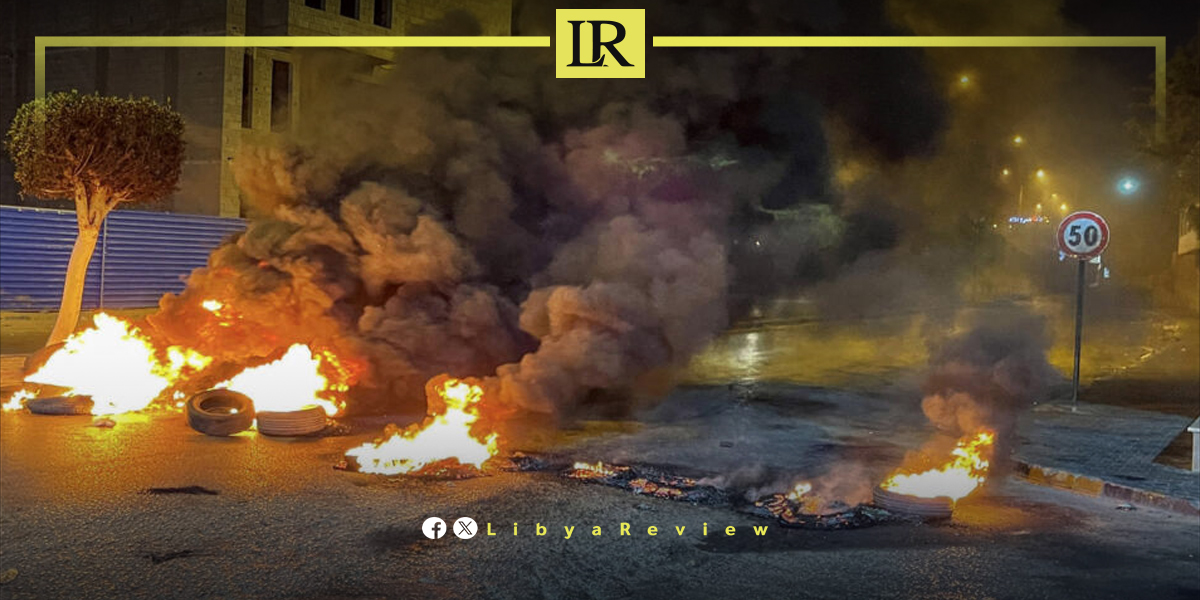
Protests in the western Libyan city of Al-Zawiya continued as demonstrators declared they would maintain their street mobilization until officials accused of corruption and misusing public funds are held accountable. The protests in Zawiya have drawn growing attention amid wider concerns about governance, transparency, and political divisions across Libya.
Groups of protesters gathered in several areas of the city, chanting slogans and carrying banners demanding investigations into what they described as widespread corruption involving senior political and military figures. Demonstrators insisted that the movement would continue until those responsible for “stealing public wealth” face legal consequences.
During the demonstrations, participants displayed placards criticizing several prominent Libyan figures, including outgoing Government of National Unity (GNU) head Abdel-Hamid Dbaiba, Minister of State for Communication and Political Affairs Walid Al-Lafi, and Libyan National Army officer Saddam Haftar. Protesters accused these figures of benefiting from corruption networks and called for judicial investigations into their activities.
Participants in the demonstrations said the protests represent a broader demand for accountability and institutional reform in Libya. Many protesters argued that corruption and misuse of state resources have deepened public frustration, especially as citizens continue to face economic difficulties, including inflation, service shortages, and political uncertainty.
Witnesses reported that the protests remained largely peaceful, with demonstrators gathering in public squares and along main roads while calling for transparent governance and stronger oversight of public spending. Protesters emphasized that their movement is not limited to local grievances but reflects a national demand for reform and justice.
Zawiya has historically been an important political and economic center in western Libya, and the city has witnessed periodic protests in recent years as citizens voice dissatisfaction with political leadership and economic management.
Libya has experienced prolonged political fragmentation since 2011, with rival governments, security forces, and institutions competing for authority. Public protests have increasingly become a channel for citizens to express dissatisfaction with corruption, governance challenges, and delays in achieving political stability.
Observers note that continued demonstrations in cities such as Zawiya highlight the depth of public frustration over corruption allegations and the perceived lack of accountability among political elites. Protesters insist that their demands focus on justice, transparency, and the recovery of public funds, which they say are essential for rebuilding trust in Libya’s institutions.
As protests continue, attention remains focused on whether authorities will respond to these demands through investigations, reforms, or dialogue with community leaders.

